Isle of Islay — Travel Journal
Islay Travel Journal
Four days, three nights — and a great deal of whisky.
A walking record of a tiny island scattered with eleven distilleries.
Isle of Islay — Travel Journal
Four days, three nights — and a great deal of whisky.
A walking record of a tiny island scattered with eleven distilleries.
Ever since I first started drinking, whisky has fascinated me. At my local bar I was taught about the deep world that sits behind a single bottle, and once I heard the idea that "to drink is to drink information," I was hooked for good. I went to tastings, worked my way around bars, and gradually a wish took shape — that I, too, wanted to work in a place like that. So for the year and a half before I came to study in the UK, I worked at an Irish pub in Osaka.
It was a place built around Scotch and beer, and the owner had been to Ireland — and to Islay — many times. Listening to his stories, I made up my mind: once I got to the UK, I would go to Islay, no matter what.
Then, talking with the Japanese friends I'd gathered with at Warwick, the idea of an Islay distillery trip came up out of nowhere. I jumped on it without hesitation, and in the end seven of us set off for Islay together. That's how this trip came about. I packed a great deal into these few days, so this is a long journal — but I hope you'll come along for the ride.
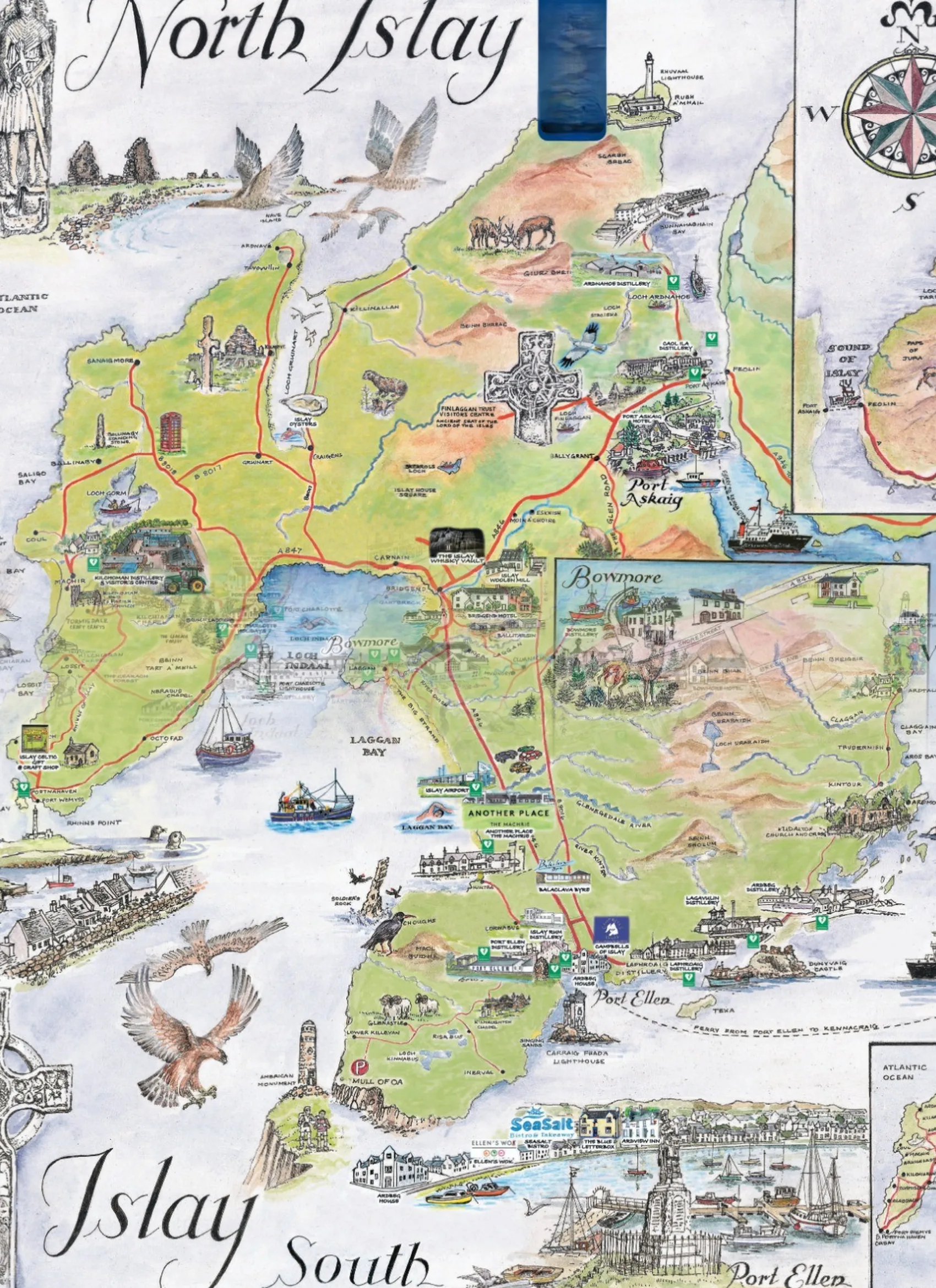
There are two ways to reach Islay: by ferry or by (propeller) plane. The ferry runs a few times a day from the Scottish mainland to Port Ellen or Port Askaig, but it takes a while. The plane runs twice a day from Glasgow (a morning service around 7am and an evening one around 7pm, in both directions) and takes roughly 50 minutes each way.
On the island, you get around by bus, by private taxi, or by Uber (which, outside Bowmore, you basically can't count on). The buses run about eight times a day, are cheap, and are surprisingly handy. Be warned, though: while the Bowmore–Port Ellen stretch is well served, between Port Askaig and Ardbeg there are only about four buses a day. My recommendation is a private taxi — a little pricier, but flexible. Plenty of locals run their own cabs, so it's worth finding and booking one online. I used Bodachs Islay Taxi. A driver named Arthur looked after us, and the service was simply the best.
More than 90% of the island's economy is whisky. Life here is so bound up with it that, by all accounts, every islander over the age of 70 once worked at one distillery or another. Arthur, our taxi driver, used to work at Port Ellen himself.
Scotland has its own laws around alcohol, and one of them is that drink may only be sold from 10am. Whisky is generally served neat, and a single serving is called a "dram." A dram is most often poured as either 25ml or 45ml.
RouteAirport → our Laphroaig cottage → Lagavulin (tour) → Ardbeg (lunch & tasting) → Laphroaig (shop) → Port Ellen (dinner at Sea Salt)
In the morning we boarded a propeller plane from Glasgow and, after a flight of about 40 minutes, touched down on the island. As we stepped off, Arthur — the taxi driver we'd booked — was already there to meet us. We piled in and headed first to drop our bags at our cottage in Laphroaig (booked through Airbnb). The road was oddly bumpy the whole way, and it turns out that's because more than 80% of Islay's soil is peat: the ground is soft and unstable, so the surface ends up rippled.
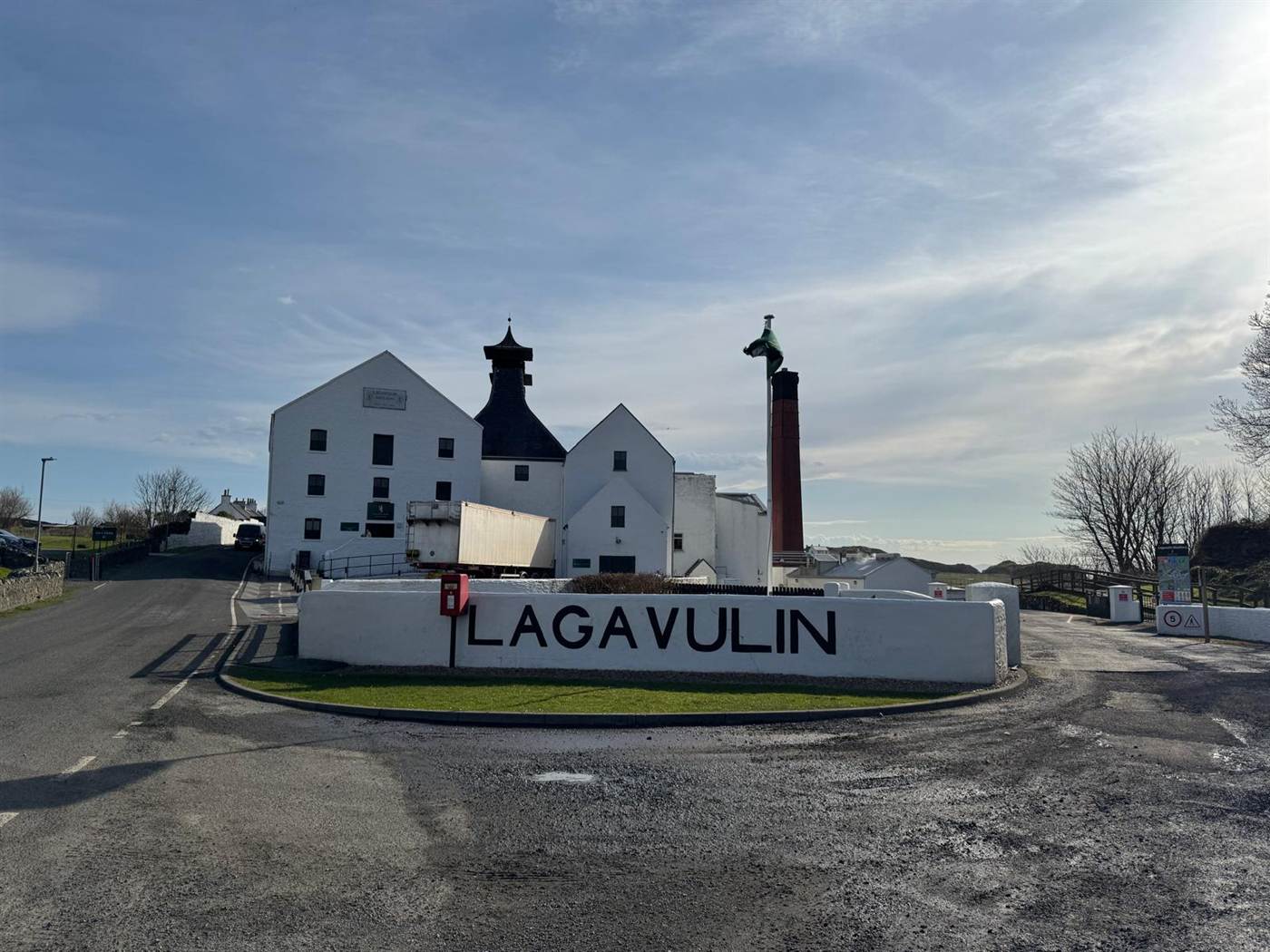
Bags down, we set off on foot for Lagavulin. Ardbeg, Lagavulin and Laphroaig sit in a row along Islay's south coast, and are sometimes called "the three brothers of Kildalton." About 30 minutes' walk east from Laphroaig brought us to Lagavulin.
We joined a tasting tour. Photography was forbidden — and since I had a video running the whole time, I'm sorry I can't show you the inside. The one spot we were allowed to photograph was the entrance to Warehouse No.3, where the tasting was held.
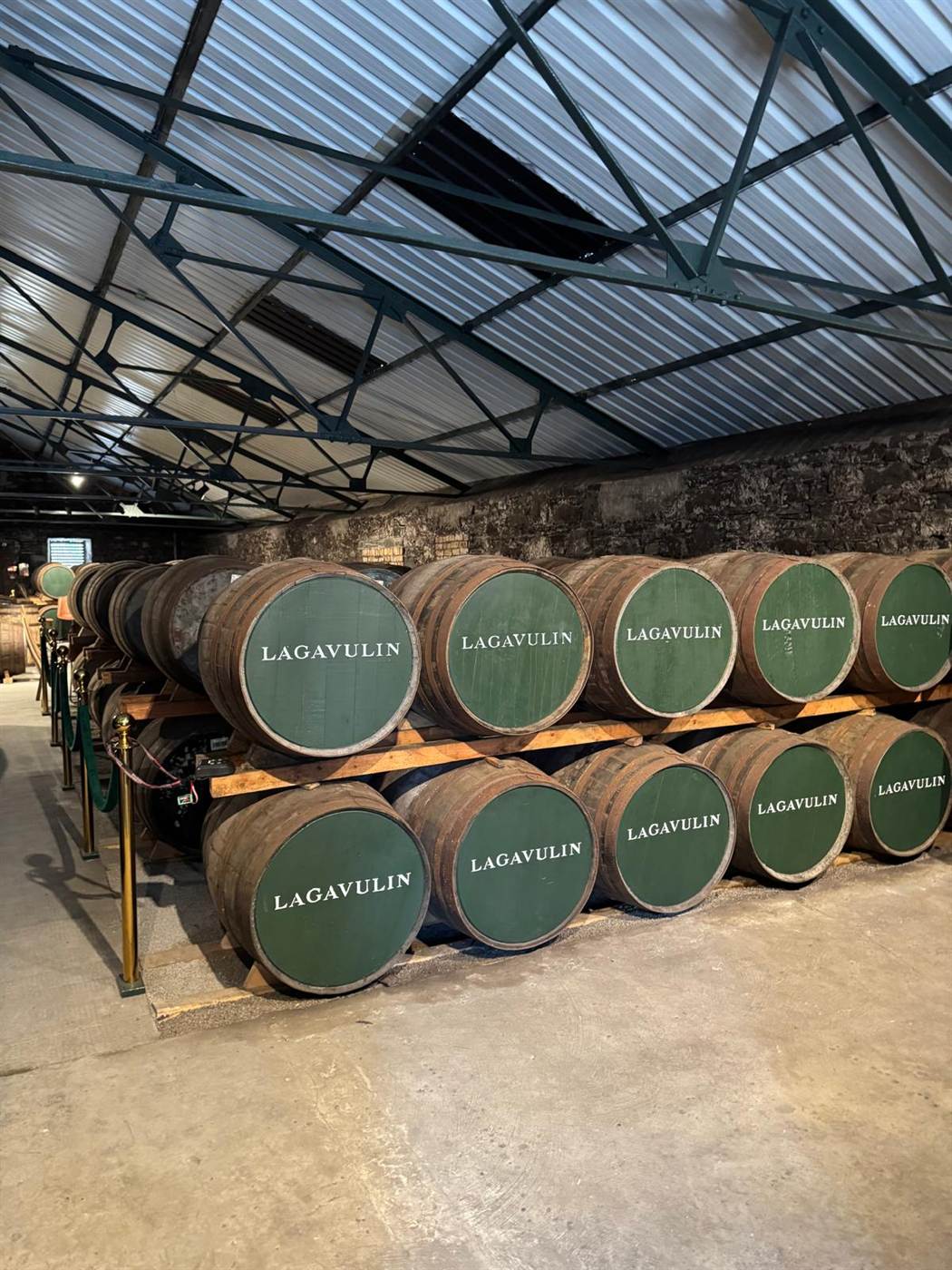
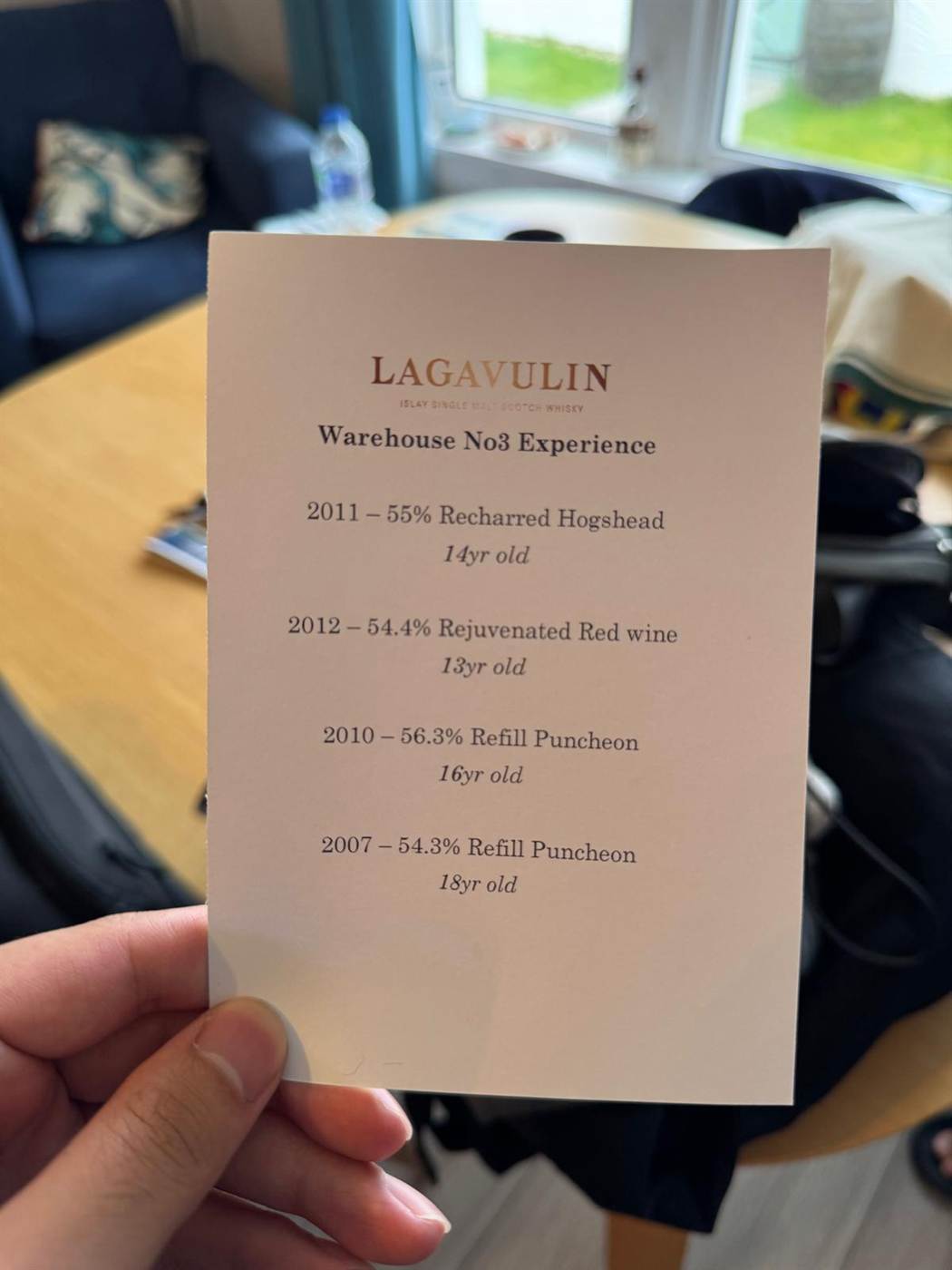
Behind these casks was the tasting space, where four tour-only casks — not yet bottled — stood waiting for us to taste our way through. The line-up is in the photos above.
Around half past ten, the tour began. First we were each handed a neat glass and a can of water. Using a valinch (a long, thin copper tube used to draw spirit straight from the cask), you pull the whisky into a beaker and pour your own glass. The thing is, they kept it coming at quite a pace and in quite a volume — so a wave of unexpected "drink-pressuring" caught the whole group off guard.
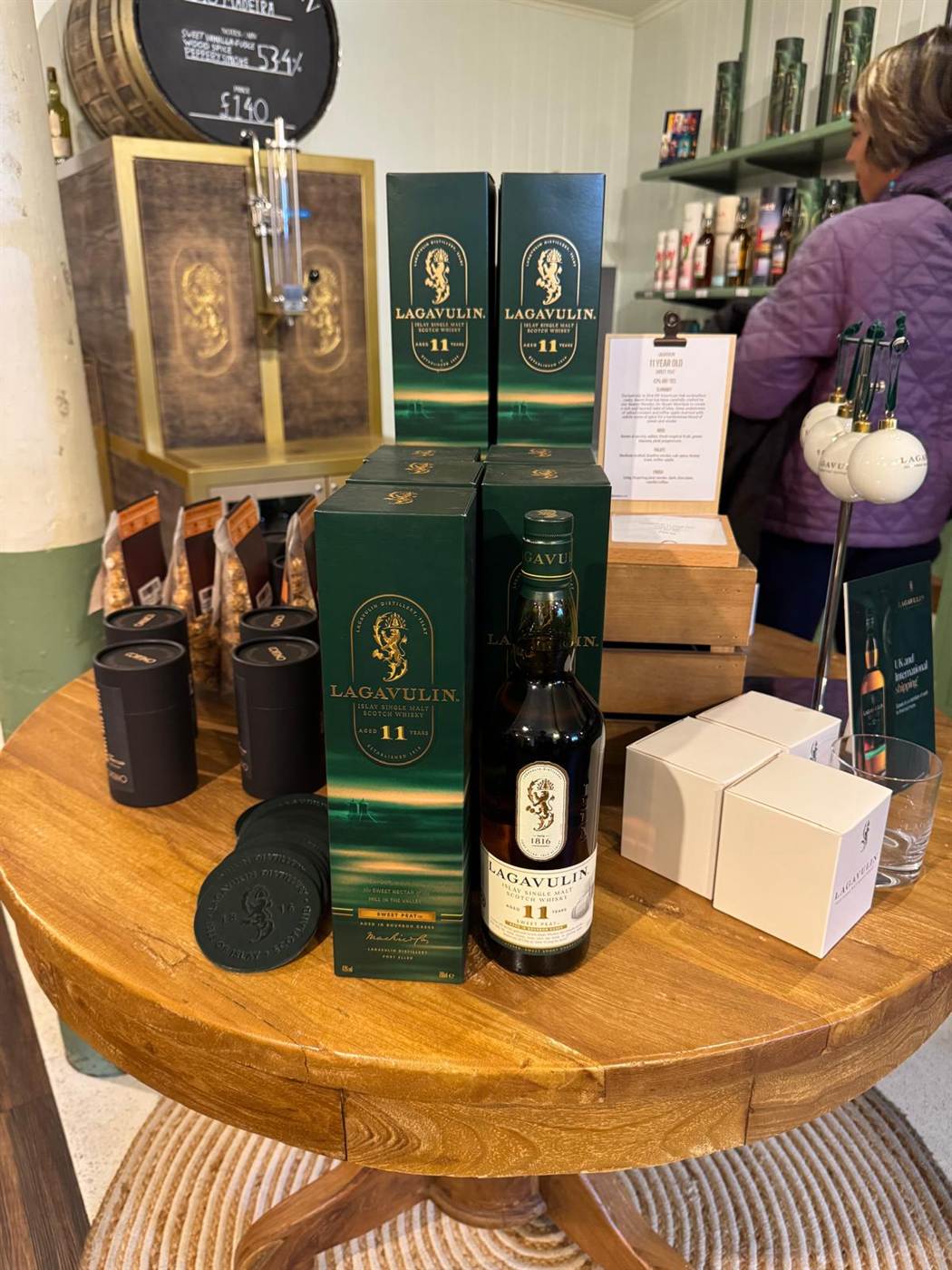
After the tour we browsed the shop for souvenirs. There was everything you could think of: limited hand-fill bottles you fill yourself, special releases, bar gear, glasses, coffee — even hoodies and caramels.
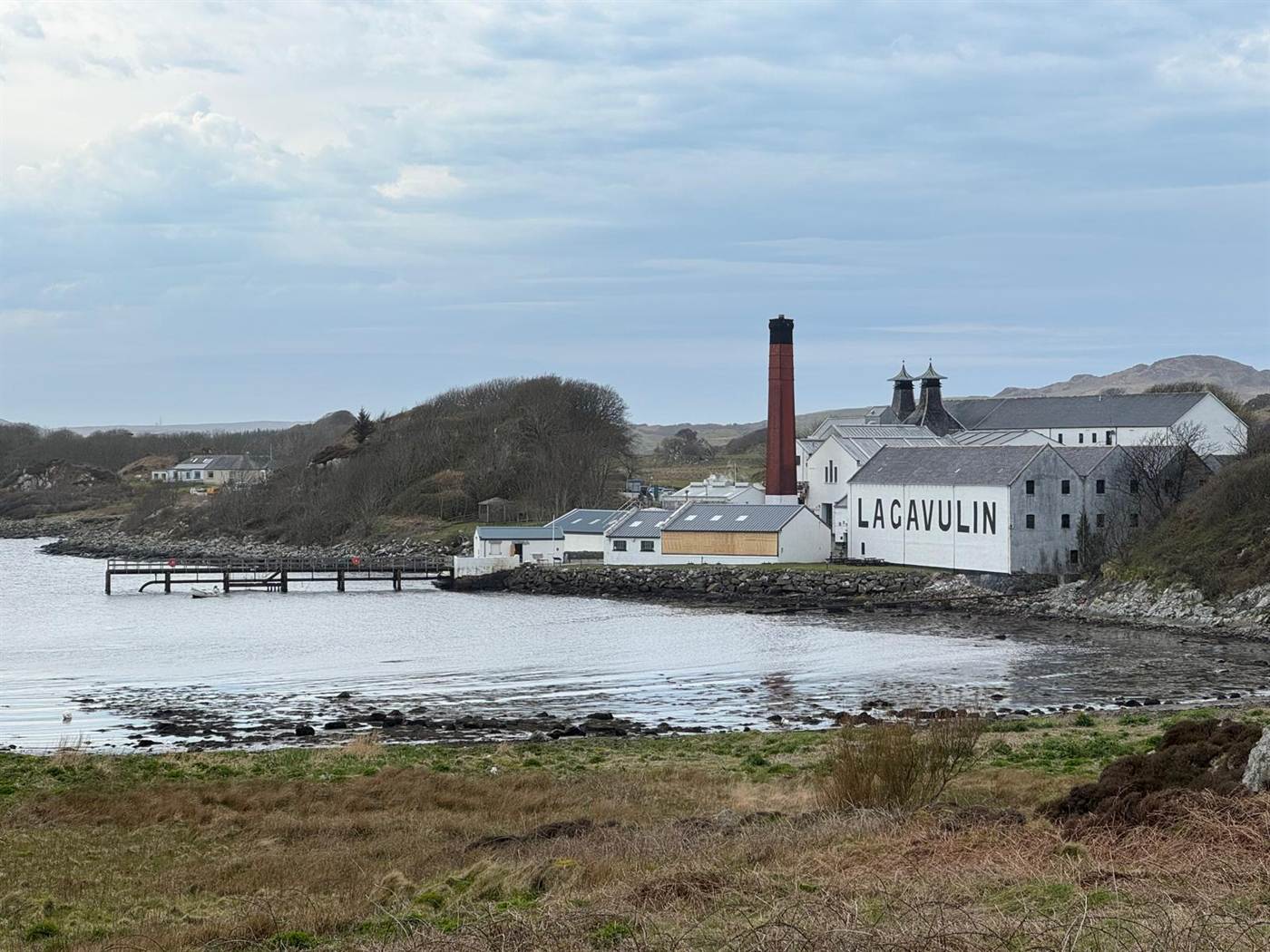
Then there's the classic distillery shot: the big distillery name standing by the shore. I was all set to photograph it when — of all things — it was under repair, and I was told it would be off-limits for about two weeks. Bad timing… But I did manage to get a shot from a distance on the way back from Ardbeg, so here it is.
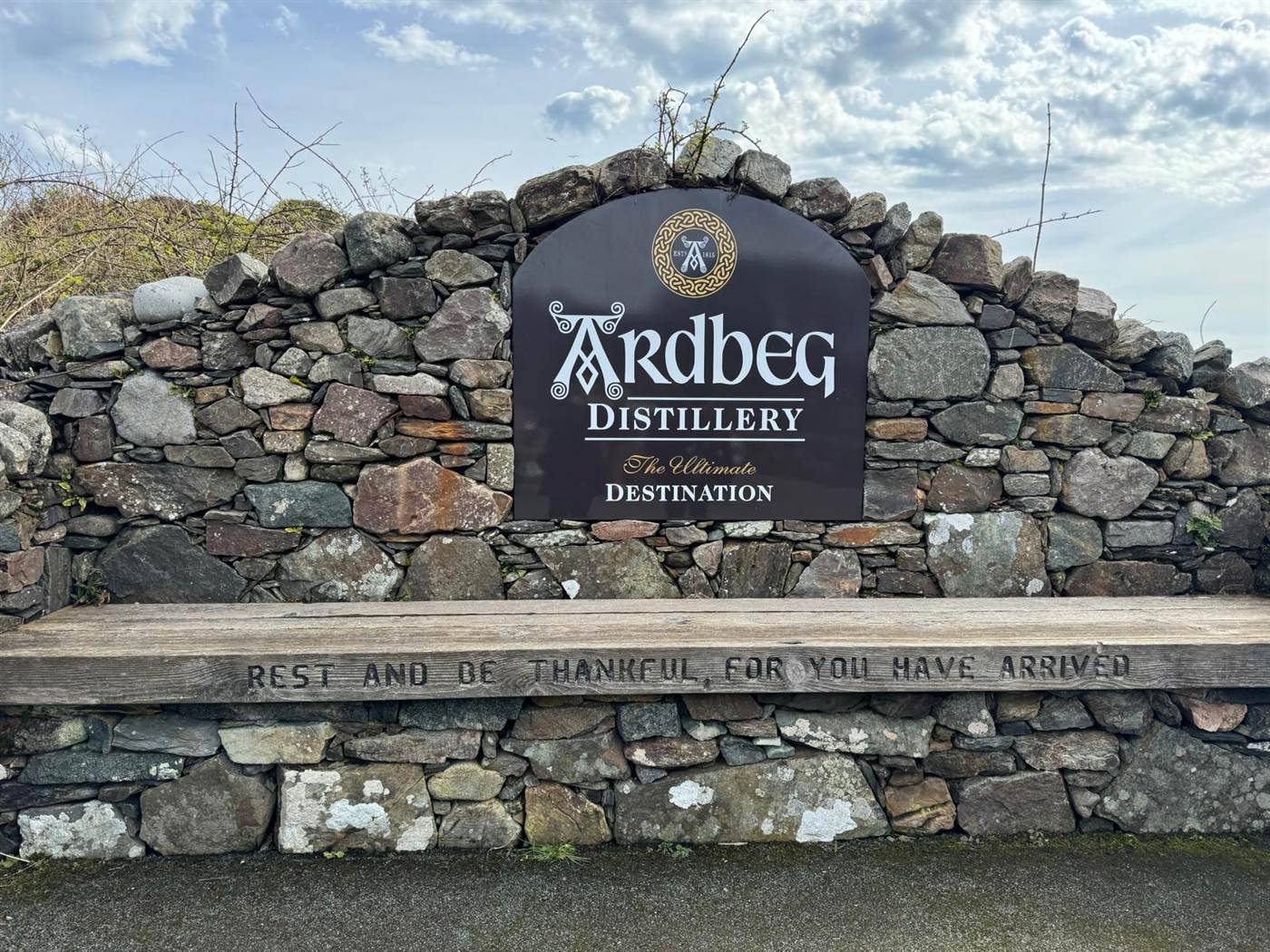
Leaving Lagavulin, we walked on to Ardbeg.
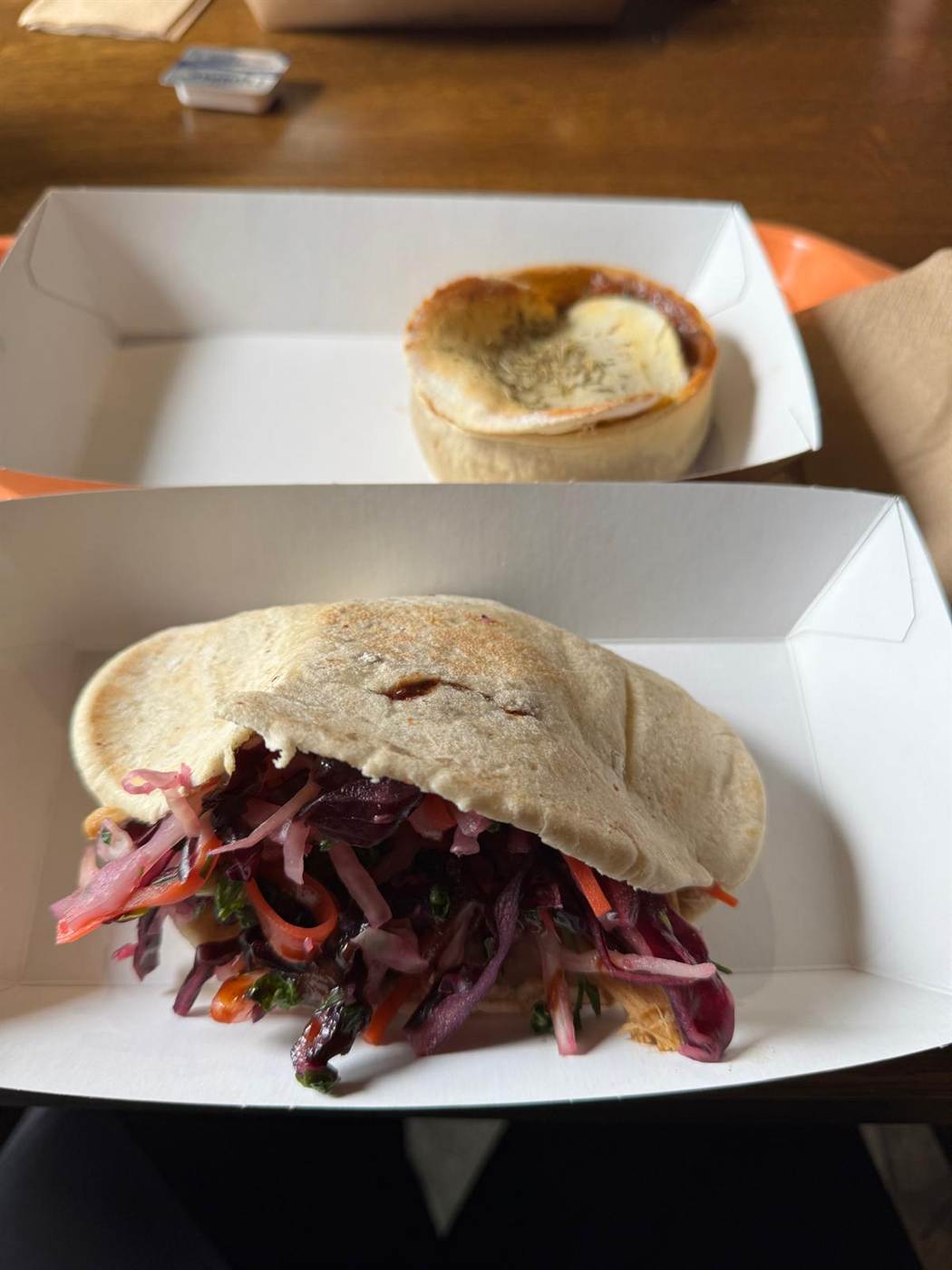
We didn't take the tour at Ardbeg, but we had lunch from the food van: a venison sandwich and a stew wrapped in pastry. In Britain, all sorts of dishes come with pickled onions, and this sandwich was no exception — except the onions made up about 90% of it. As a result, honestly, the only memory I have left is of eating onions.
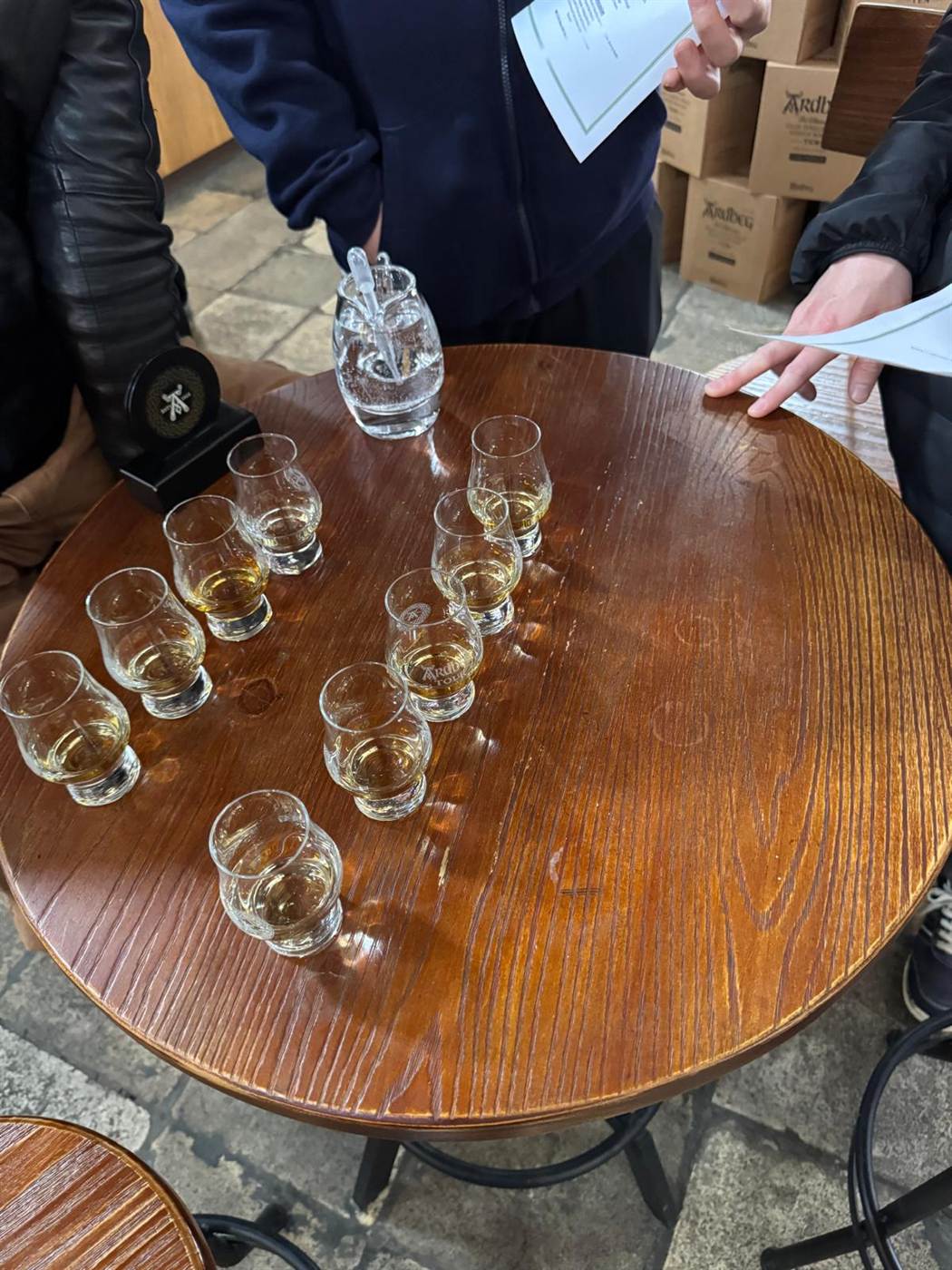
After lunch we ordered a tasting set at the bar counter, which shares a room with the shop, and worked through about ten rare Ardbegs at our leisure.
As we drank, a cheerful member of staff specially shared a taste of the Ardbeg 23-Year-Old with us. Ardbeg, too, was under repair, so I couldn't get the view from the shore (and with no opposite bank either, there was no shot to be had). Then it was another hour's walk back to Laphroaig.
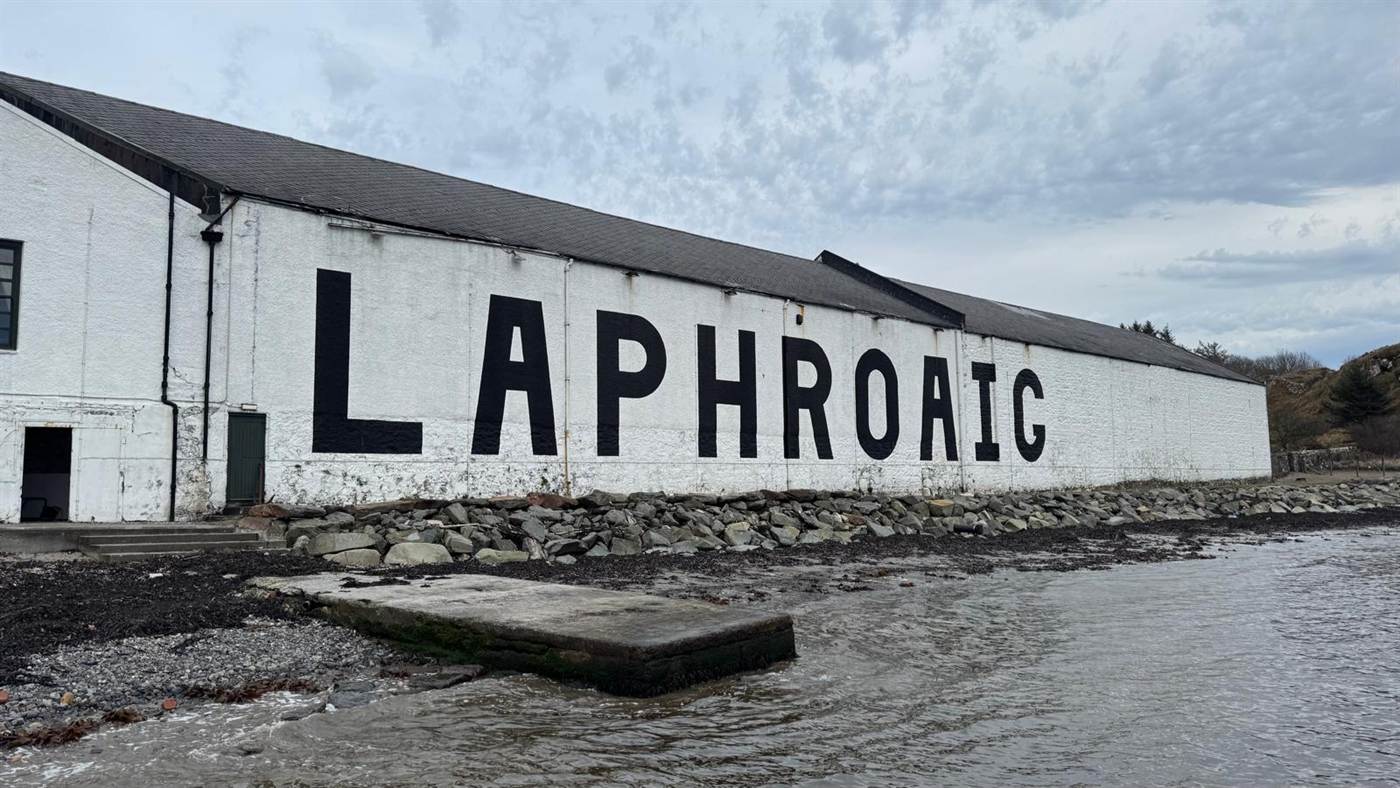
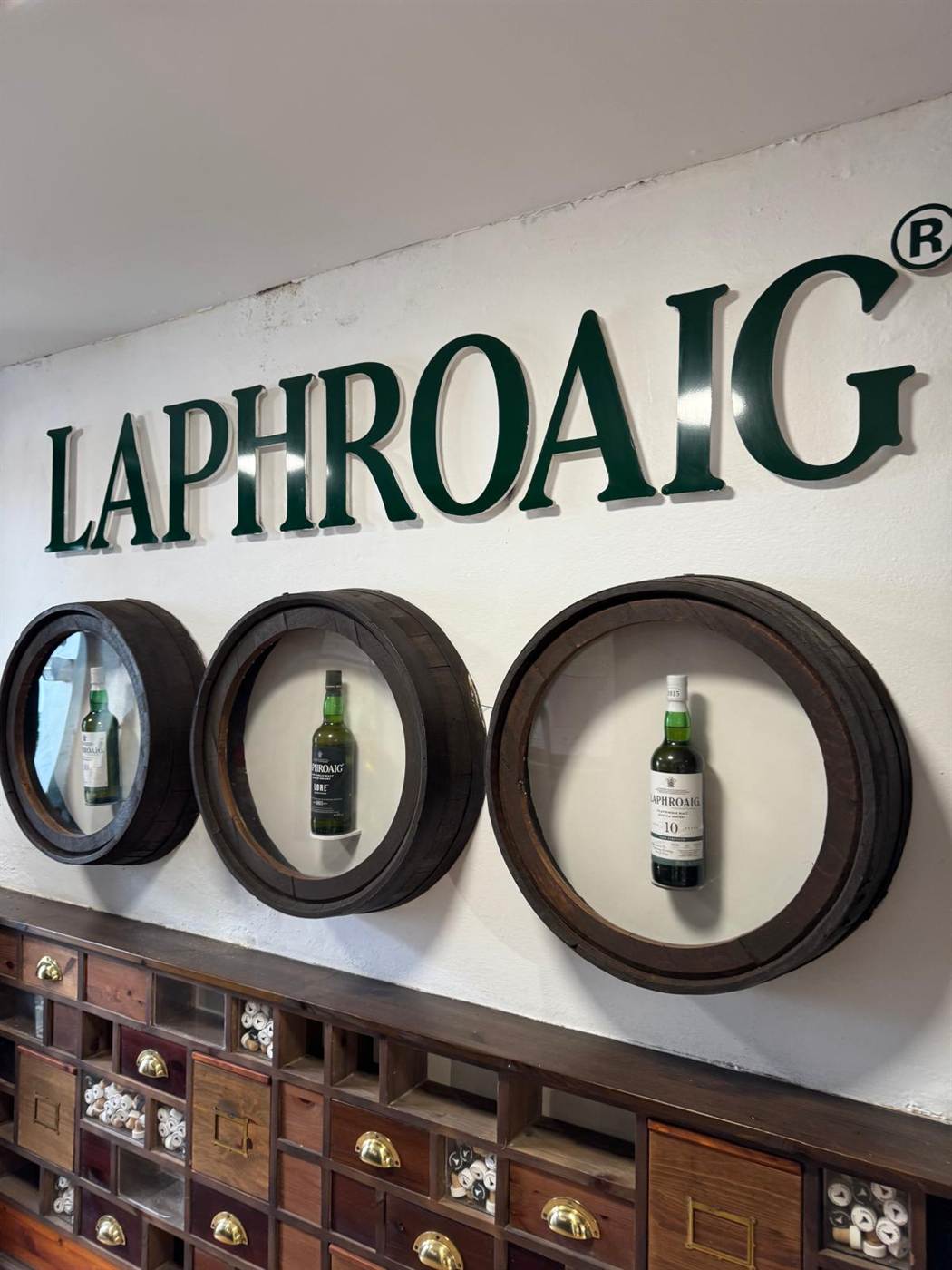
At Laphroaig I first photographed the exterior, then headed into the shop. I bought a bag, a winter coat (at around £65 it was ridiculously cheap for a coat, so I grabbed it on the spot), and a T-shirt.
Back at the cottage we rested a little, then walked another hour to Sea Salt in Port Ellen (the island's second-largest town) for dinner. I had an Islay beer and the best fish & chips imaginable, made with cod caught off Scotland.
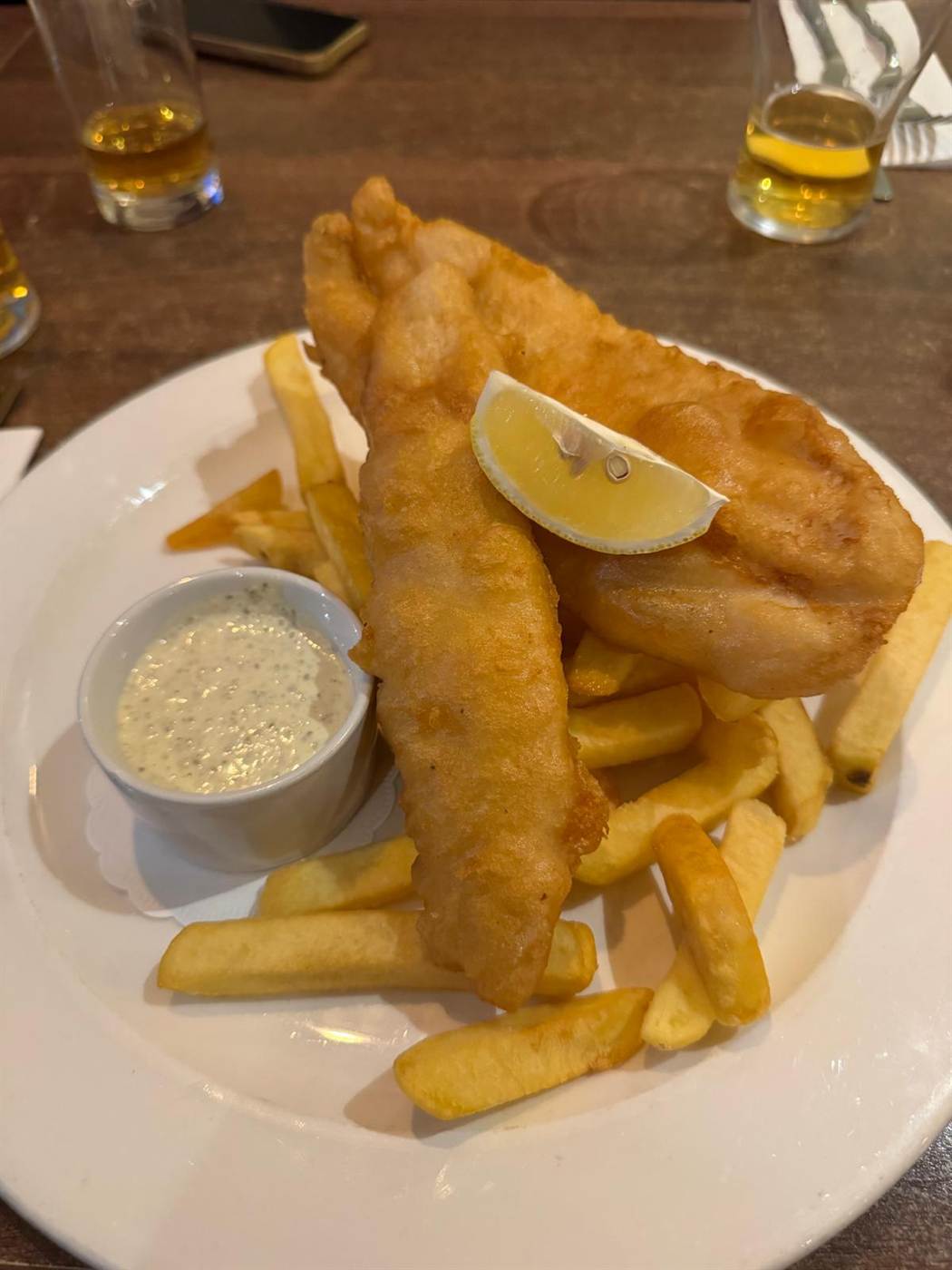
Afterwards we stocked up on breakfast and supplies for the coming days at the nearby Co-op, and on the way home Arthur happened to pass by and drove us back to the cottage — and so the first day came to an end.
RouteBreakfast → Bowmore (tour & tasting) → Machir Bay → Kilchoman (lunch) → Bruichladdich → the Woollen Mill → shopping in Bowmore → dinner at the cottage
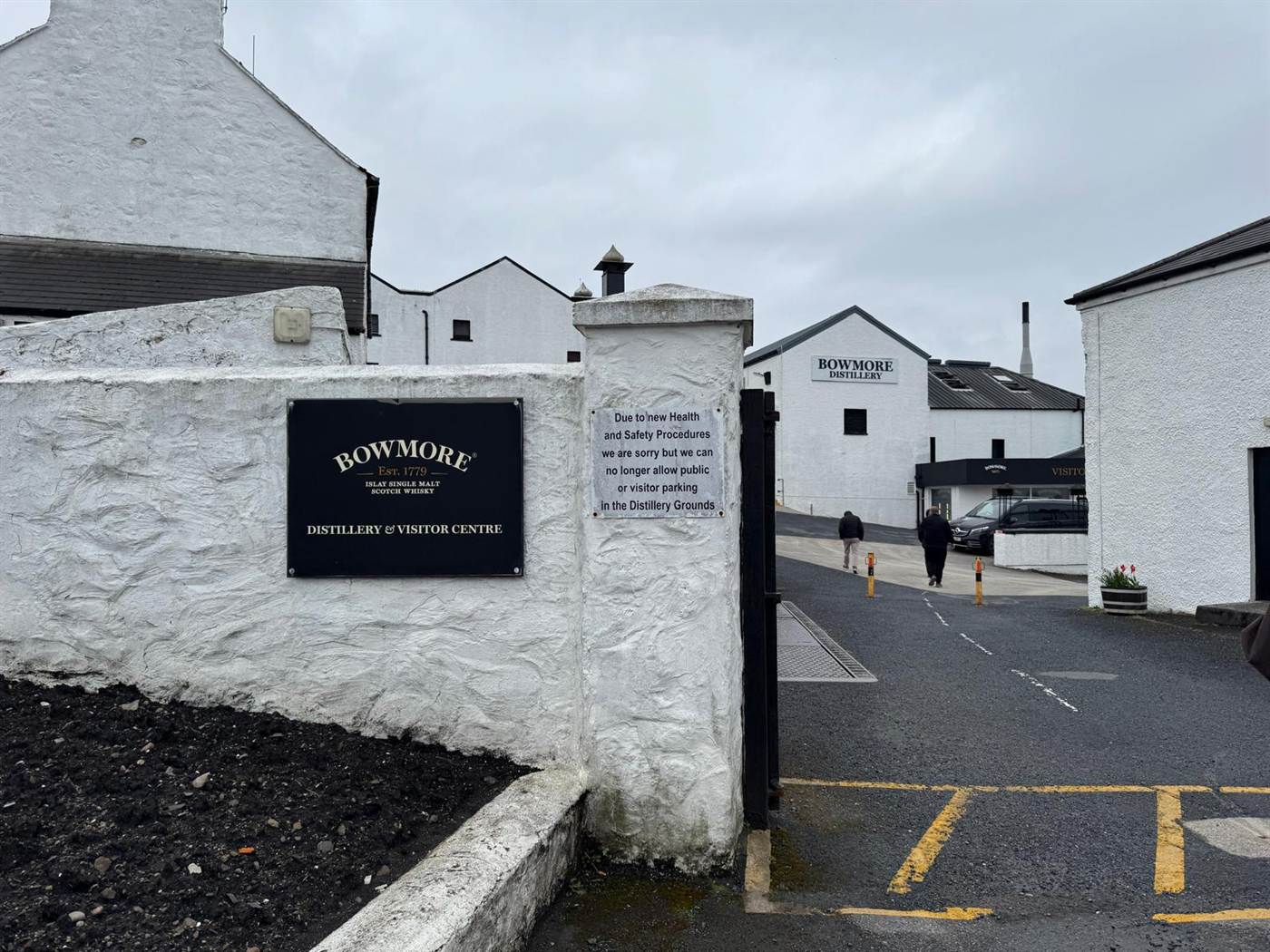
Day two. After breakfast, Arthur came to collect us and we were off to Bowmore. The tour began almost the moment we arrived. Here, too, video was forbidden but photos were fine — so I shot enough that I could practically have made a film. We should have been able to see the malting room, but for some reason the door was shut, and we were shown the kiln room instead.
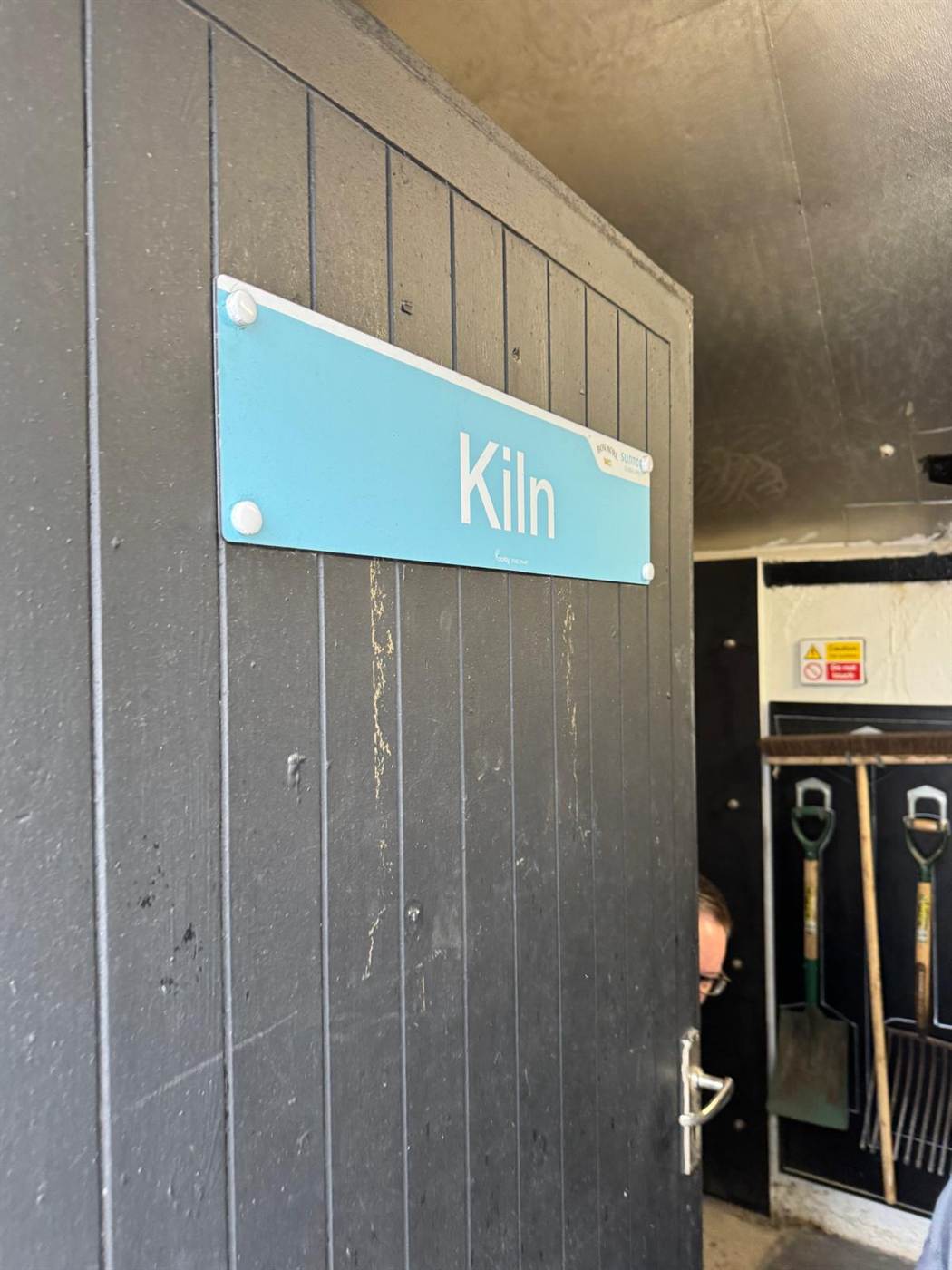
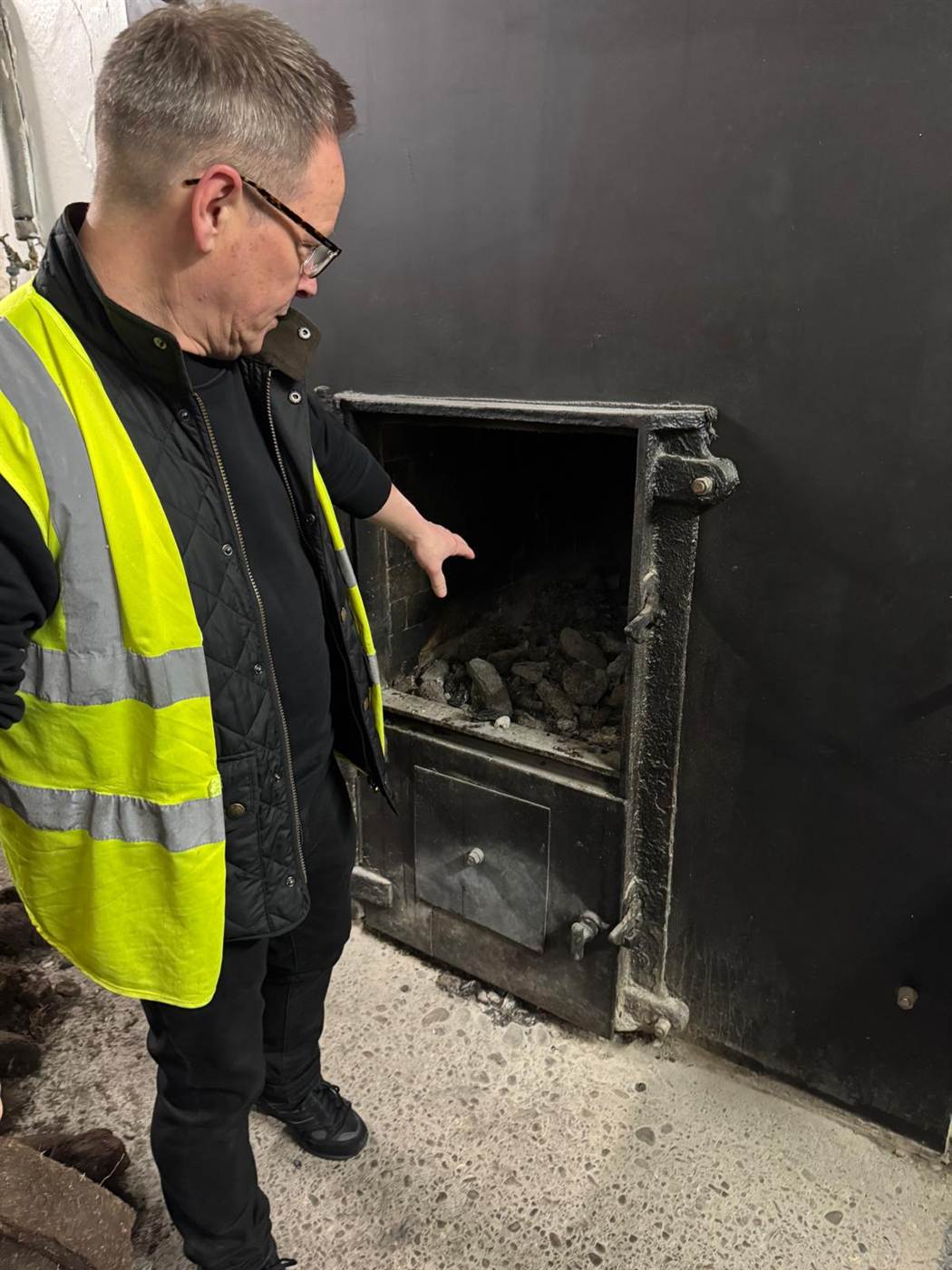
Inside the kiln there are two spots where peat is burned, used three times a day to dry the malt. This is the very place that appears in a certain Japanese YouTuber's Islay video, so I got rather over-excited all on my own.
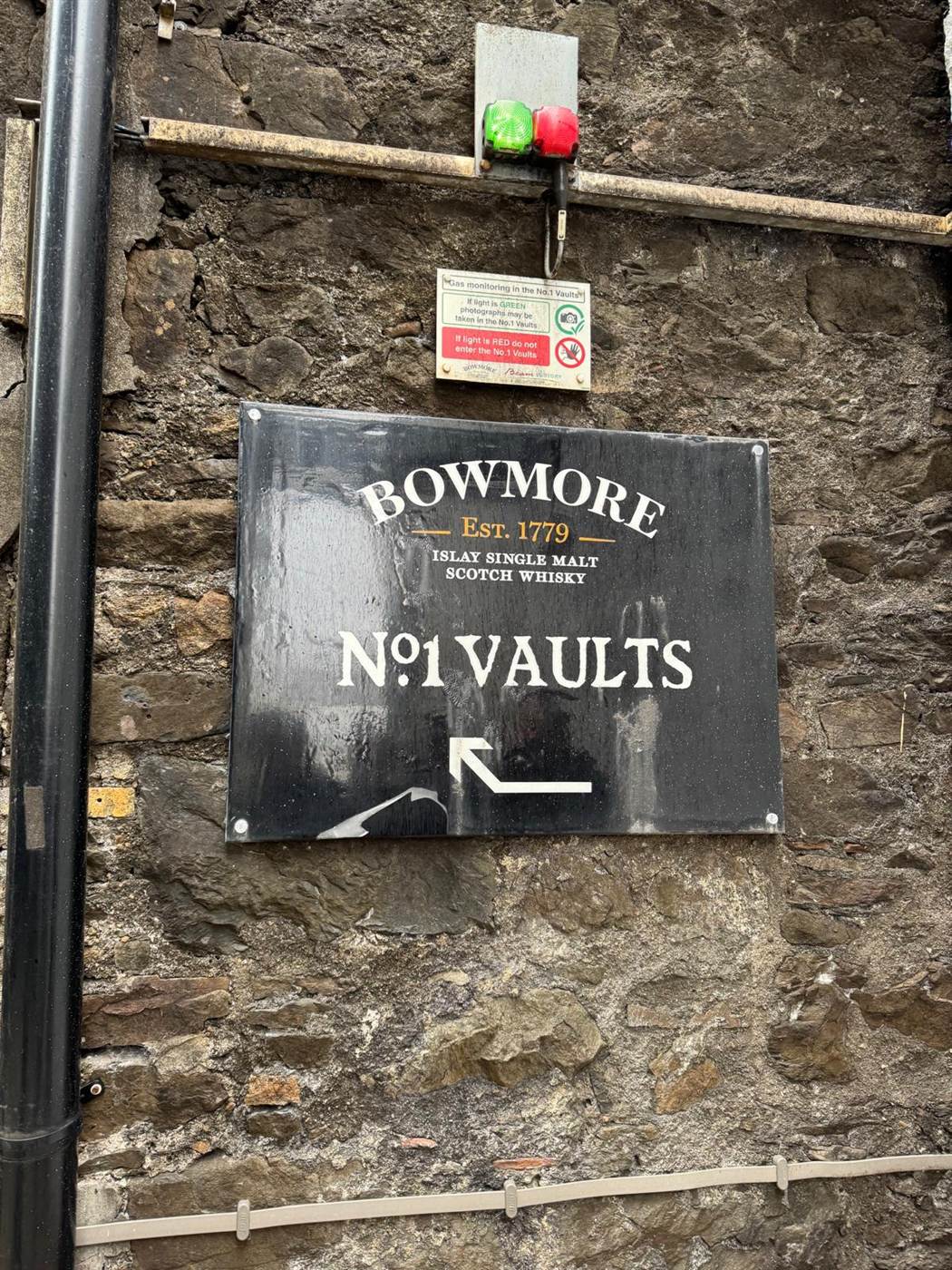
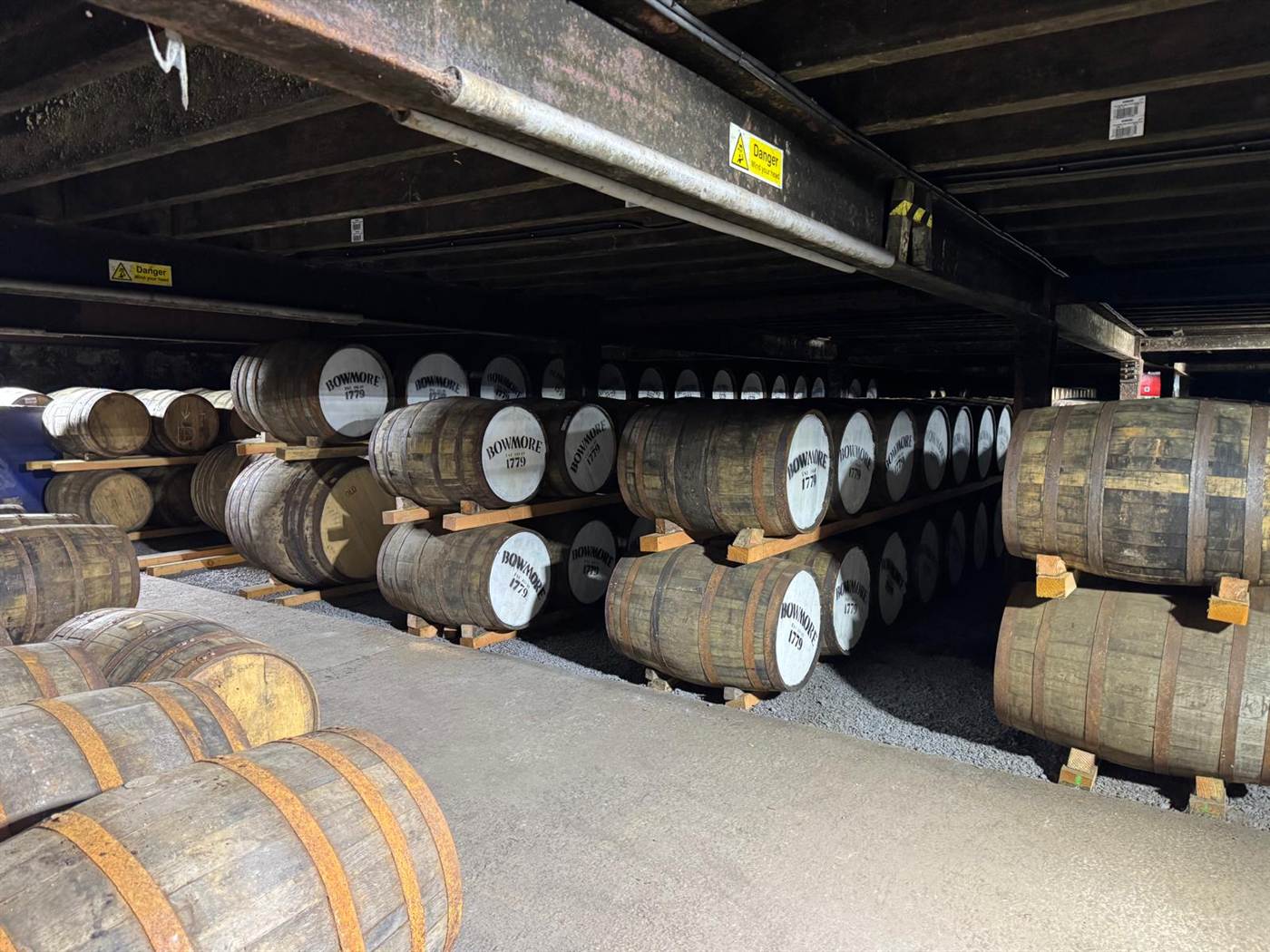
Next we went to the No.1 Vaults, a warehouse at sea level. Among the endless rows of casks there was even an experimental Bowmore maturing in a Japanese Mizunara cask that had once held Yamazaki. I'd love to taste it if it's ever released.
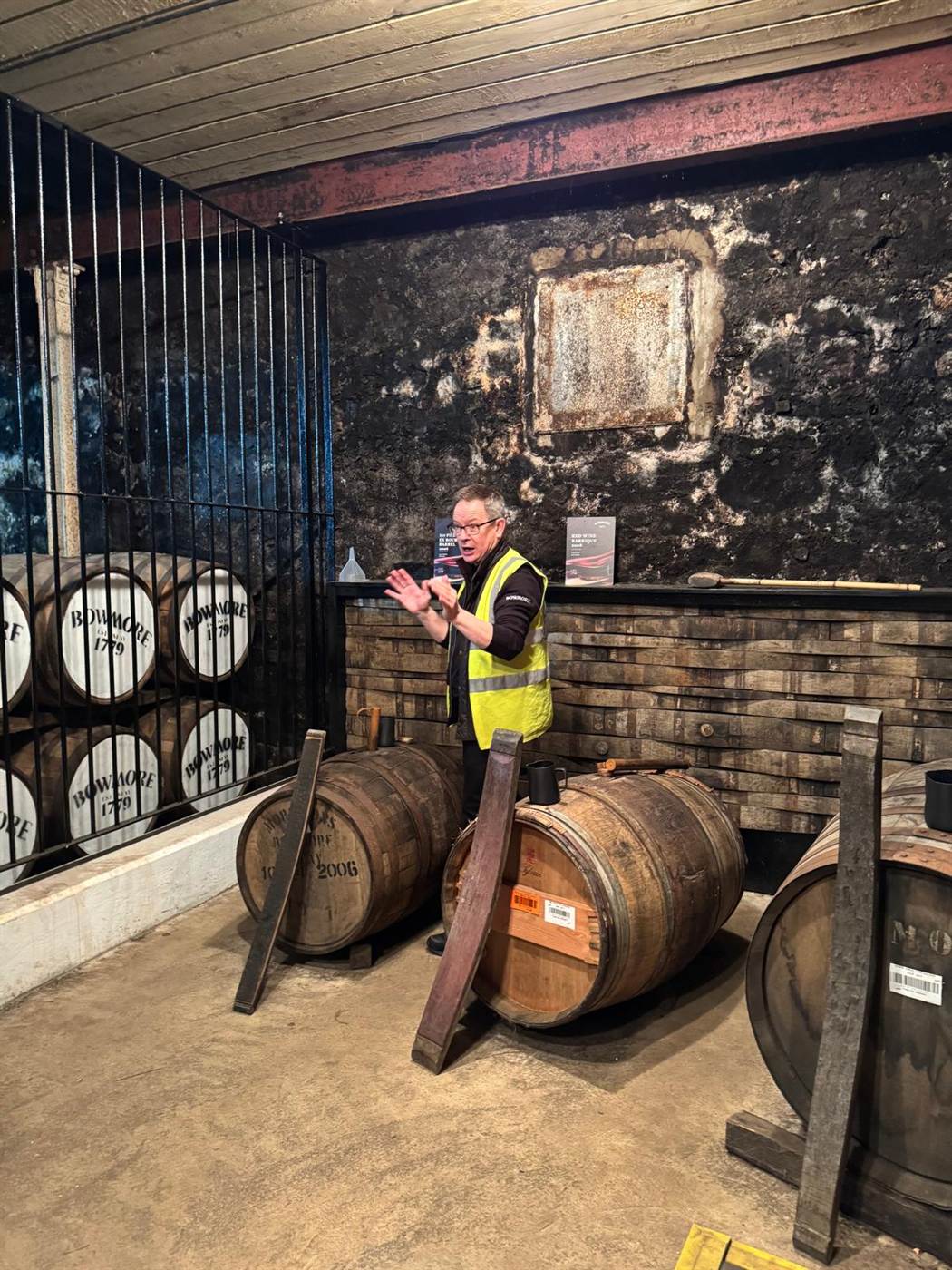
At last, the tasting room. It's caged in like a prison cell, and apparently this is the only area where you're permitted to drink. Scotland is extremely strict about alcohol: spirit still in the cask hasn't yet had duty paid on it for sale, so it can only be drunk in a designated area.
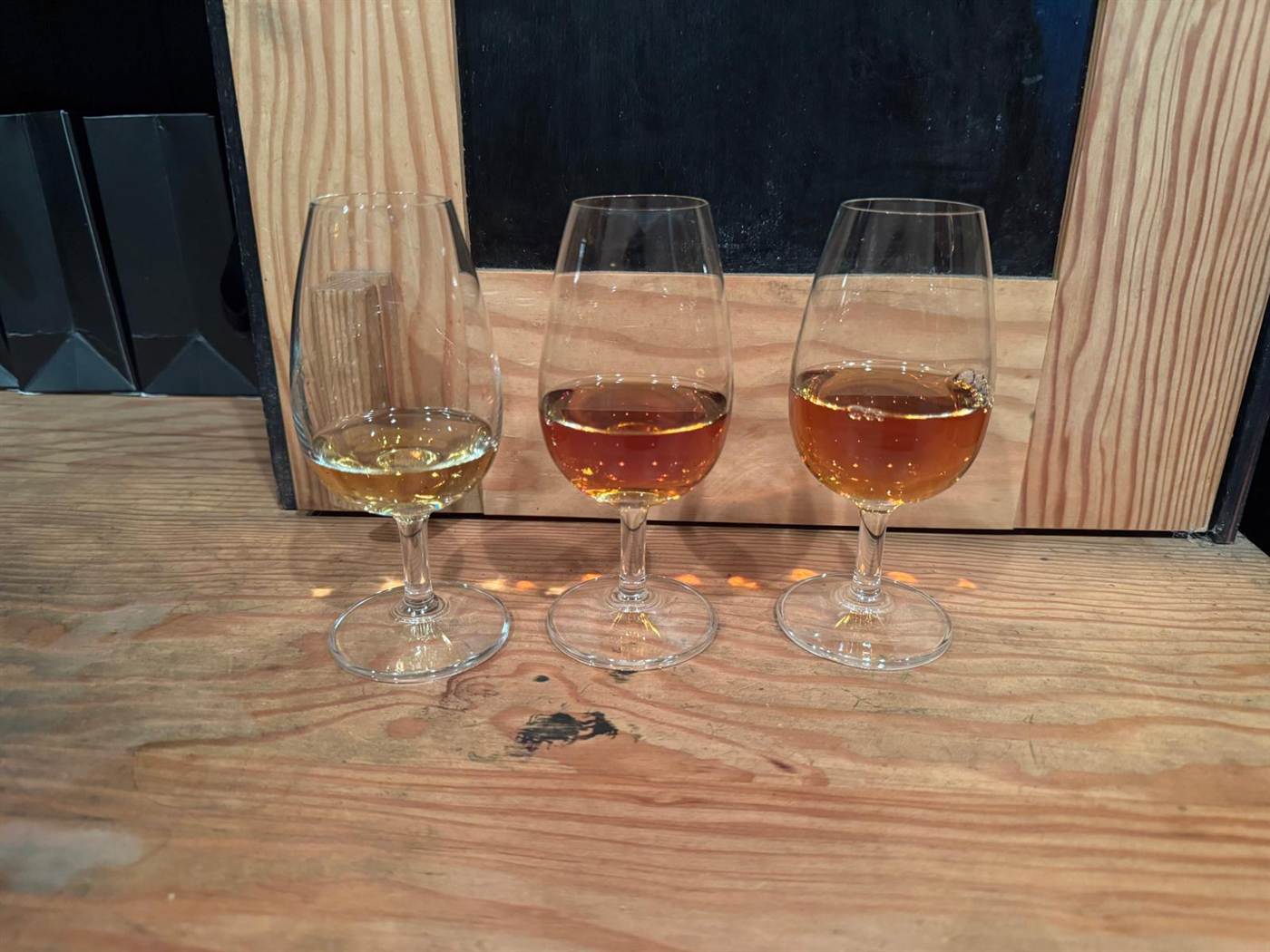
Three whiskies were laid out. We tasted them one by one, with an explanation of the spirit and the cask each time, and at the end we even got to bottle our favourite cask whisky ourselves.
From the left: a bourbon cask, a red-wine cask and a sherry cask — you can see the difference in colour. For the record, I chose the sherry-cask whisky on the right.
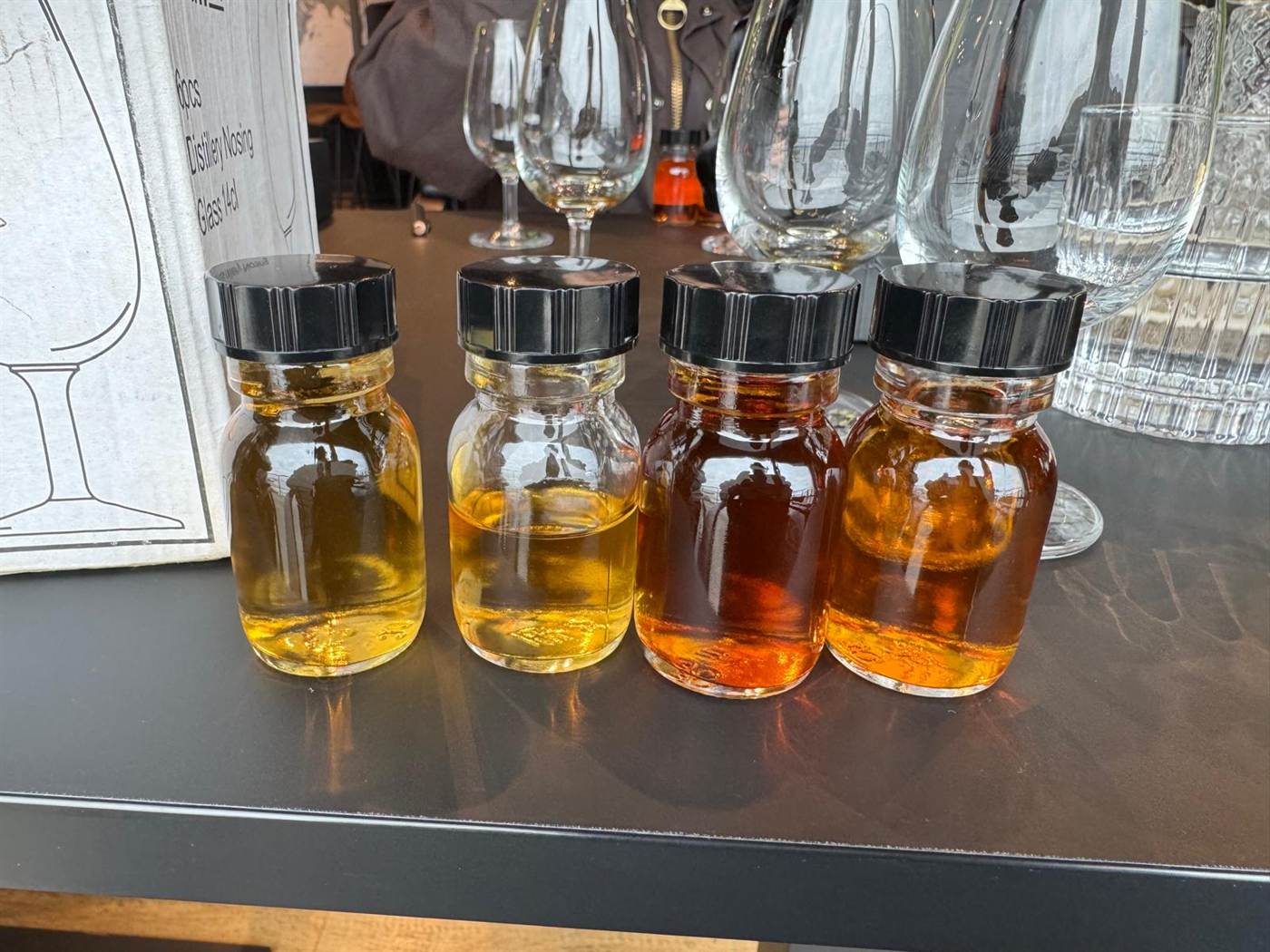
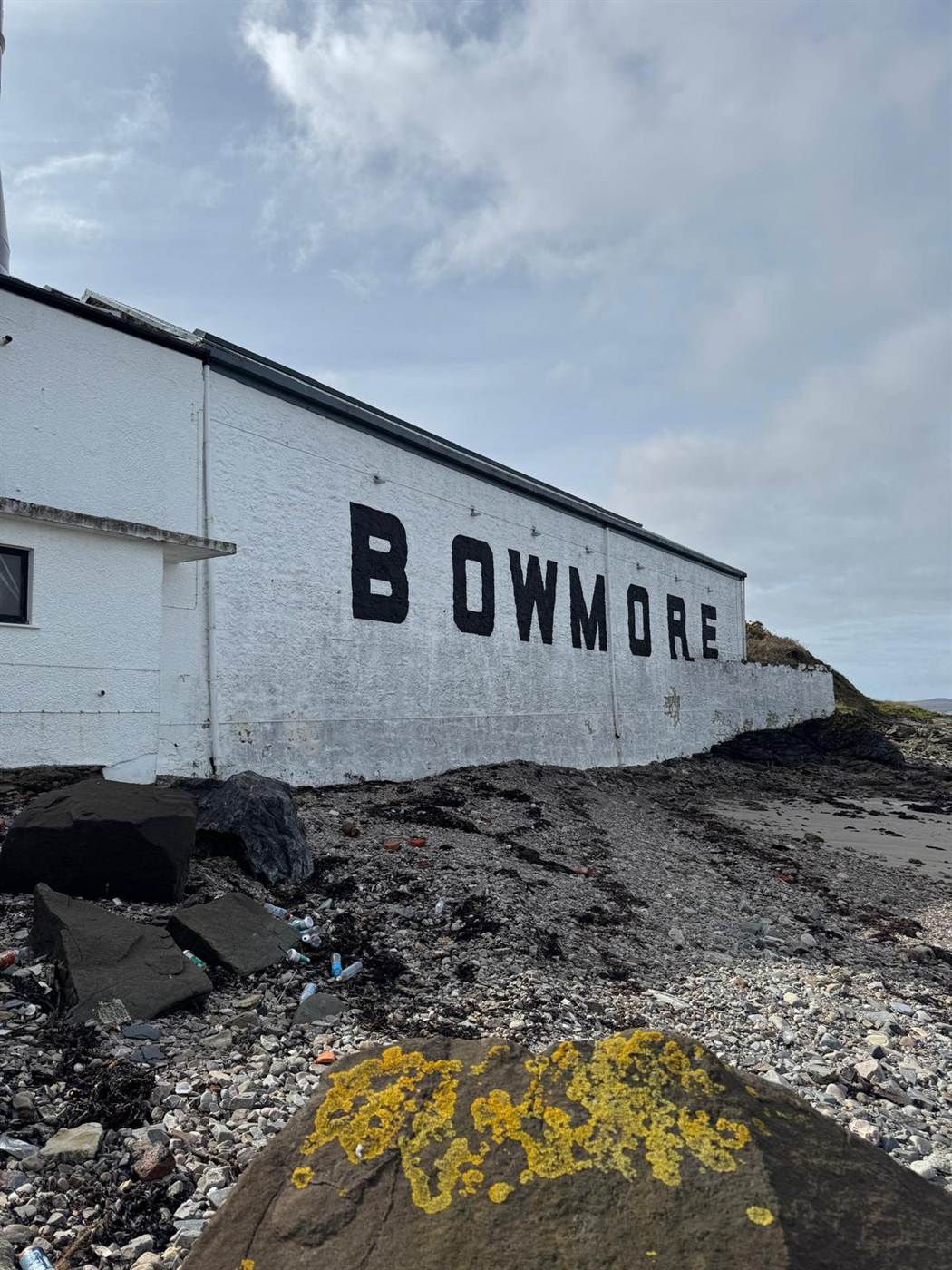
From the tasting room we moved to the Bowmore bar, where we could try two more whiskies on top — the sort of bottles that are far too expensive to buy. Whatever we couldn't finish in the tasting room and the bar, we were allowed to bottle into small flasks and take home. Generous, to say the least. After photographing the exterior, of course, we left Bowmore behind.
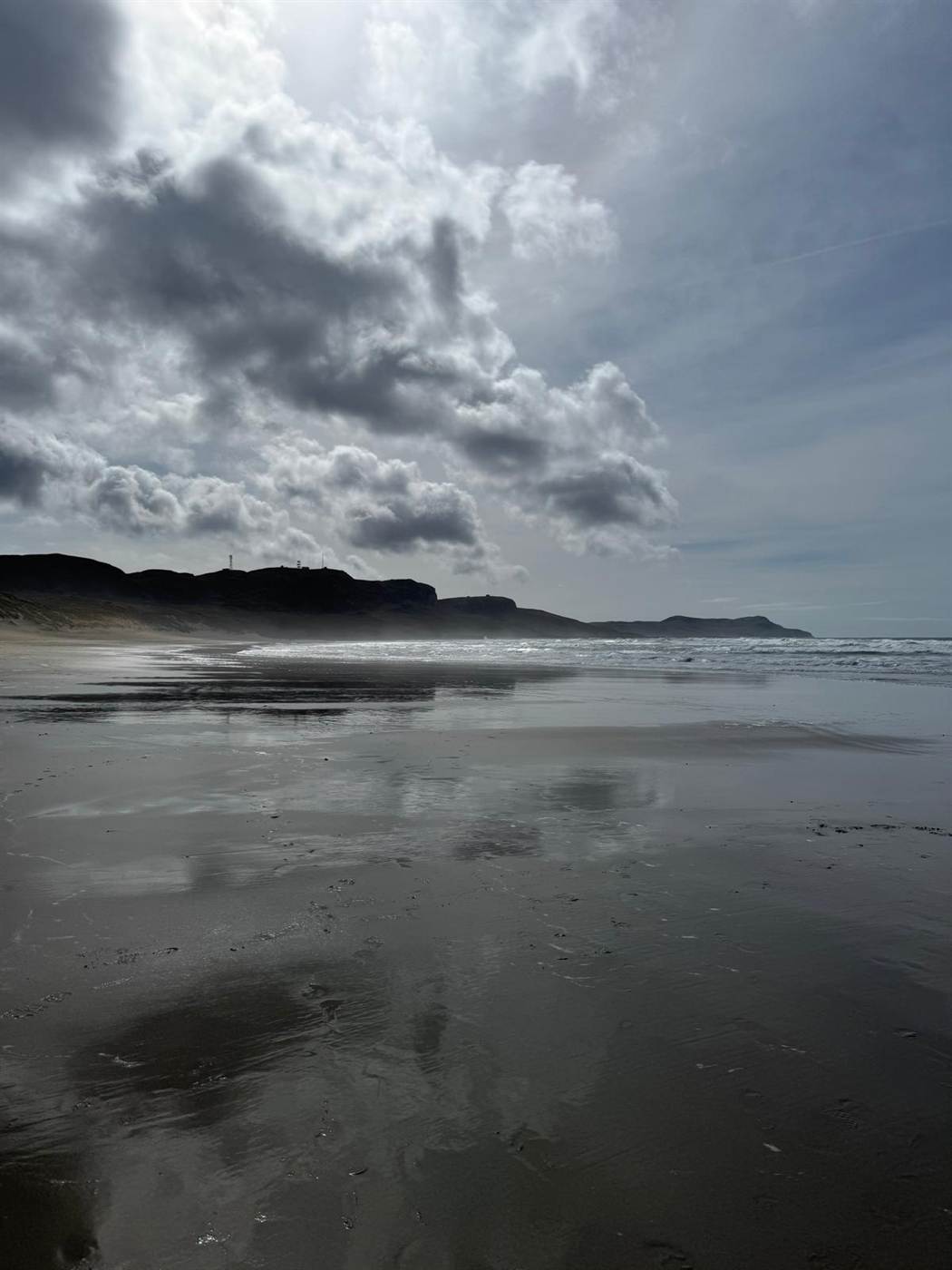
We set off from Bowmore around midday, bound for Kilchoman — but first, Arthur took us to Machir Bay.
Kilchoman's signature bottle, "Machir Bay," takes its name from this very beach. Beach though it is, the wind is so fierce and the waves so strong that apparently no one swims here.
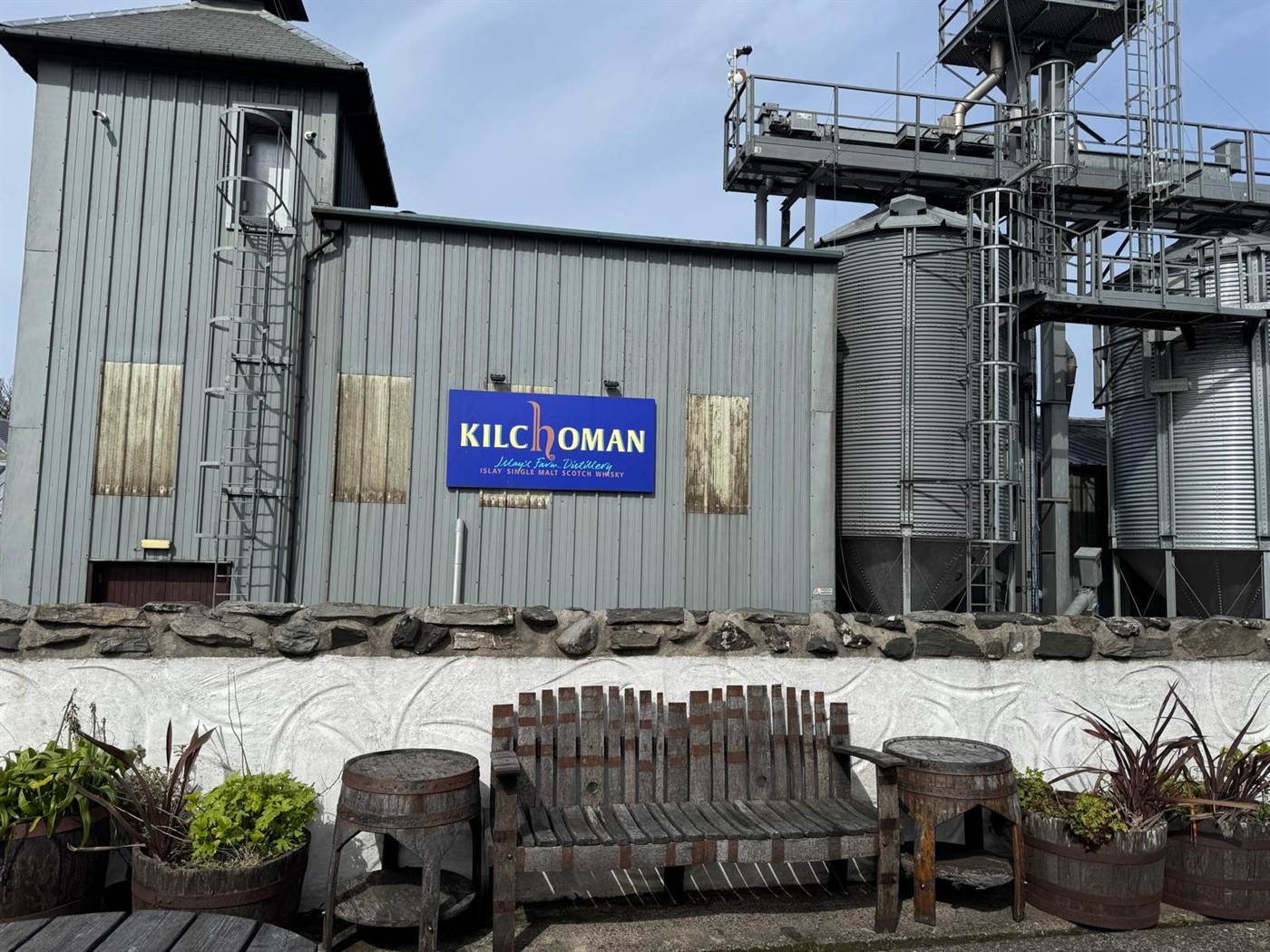
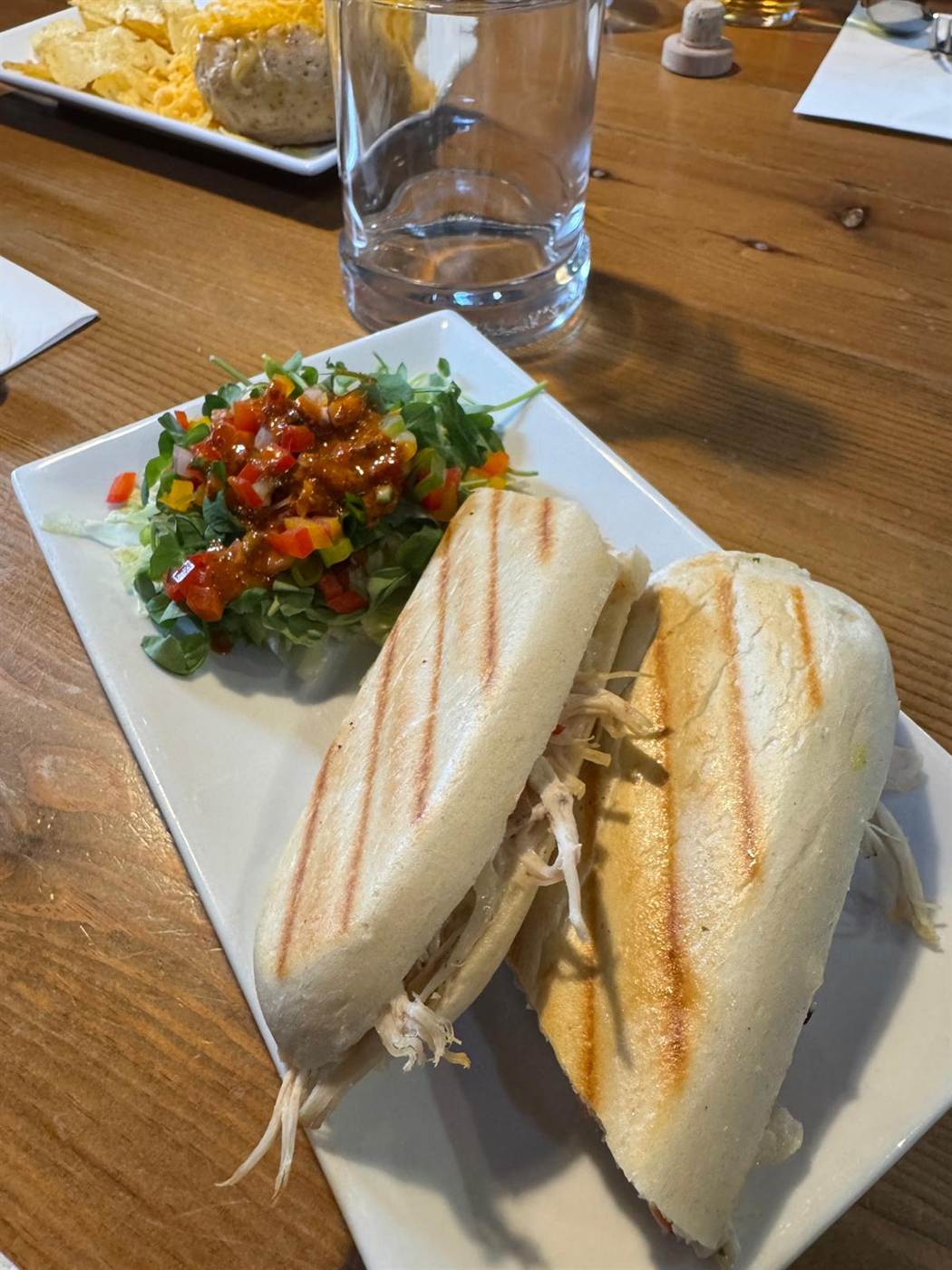
And so to the distillery. We had a little browse of the shop and a small tasting, and lunch too. Their panini is apparently famous — and it was absolutely delicious.
Leaving Kilchoman, we carried on to Bruichladdich.
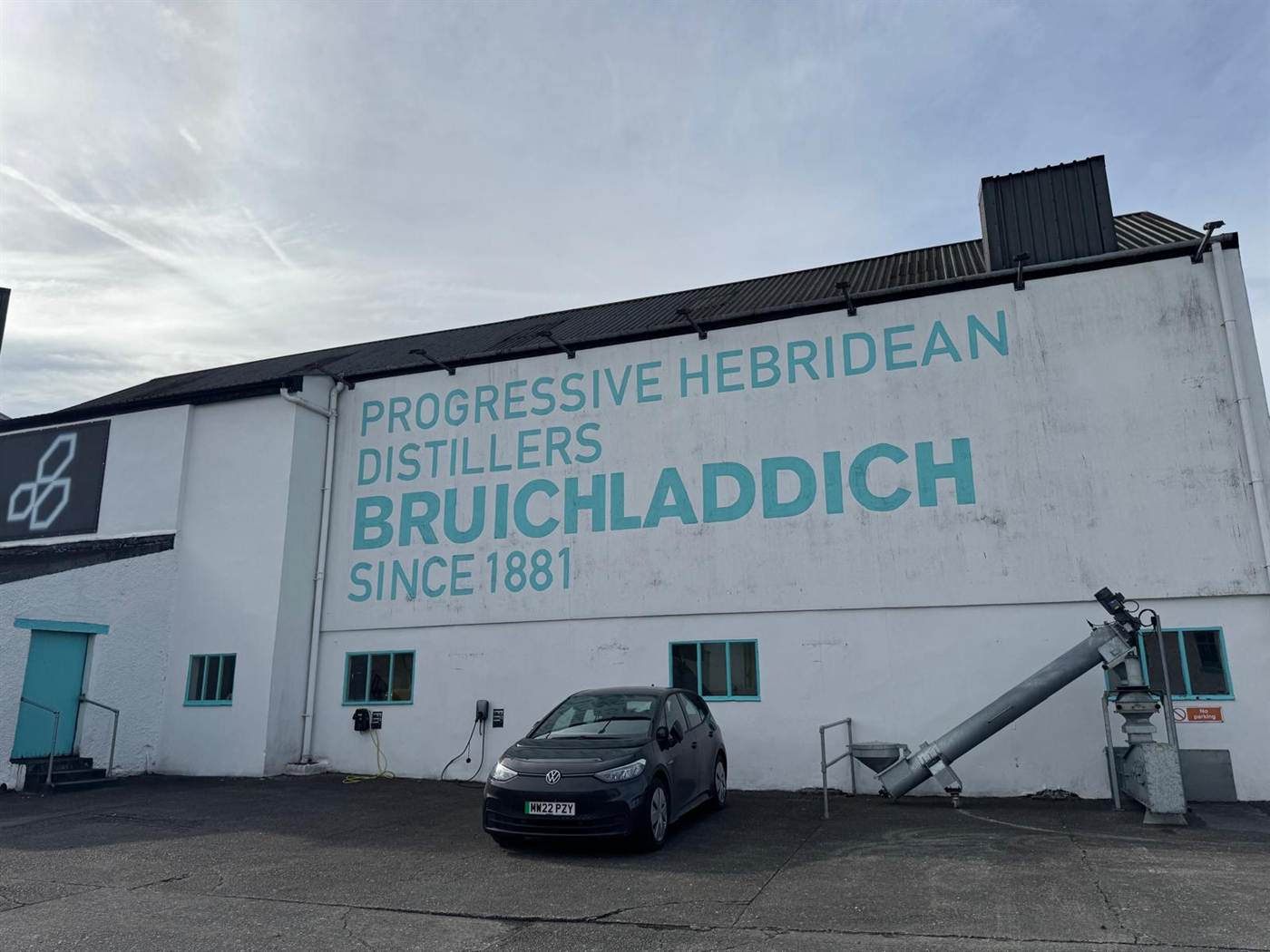
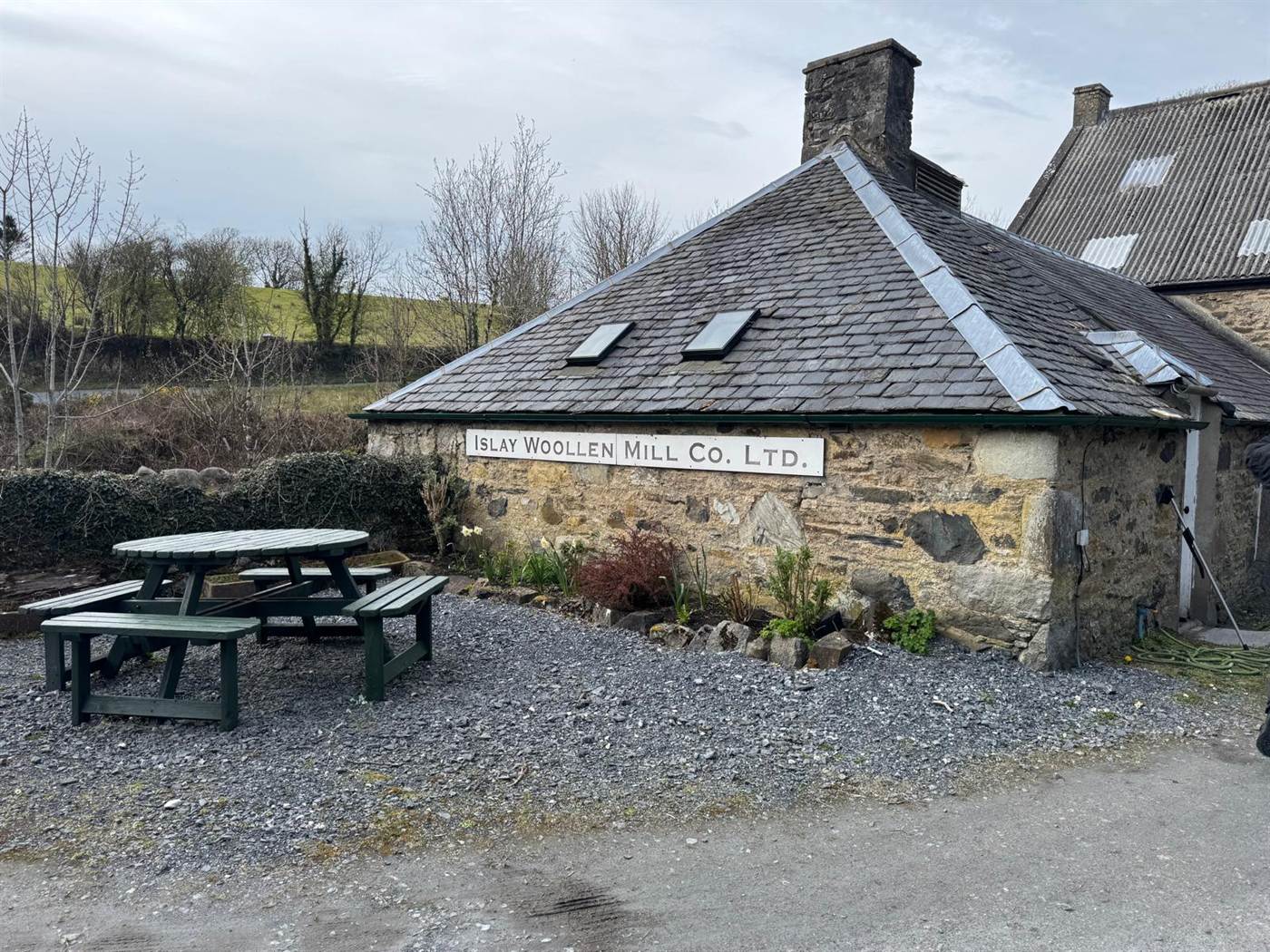
Bruichladdich, I'm told, is also the home of Fèis Ìle — the island's biggest annual event, held every May. We did plenty of tasting at the bar. Every distillery is remarkably generous with its tastings; at a single one you can drink enough, for free, to get thoroughly drunk. Bruichladdich in particular kept the pours coming, large and frequent — the distillery where we managed to drink the most.
After that we visited the Woollen Mill. Knitted clothes, gloves and all manner of wool products were lined up, and the second floor of the shop was a working factory with the wool-weaving machines running. On the way back we shopped at the Bowmore Co-op, and made dinner at the cottage that evening.
Route(three head home in the morning) → The Machrie → Bunnahabhain → Ardnahoe → Port Askaig → Caol Ila (lunch & a reunion) → the Whisky Vault → shops in Bowmore → dinner at the cottage
Day three. In the morning, three of our group went back to the mainland ahead of us, and the remaining four spent the day sightseeing. Once again, Arthur drove us all over the place.
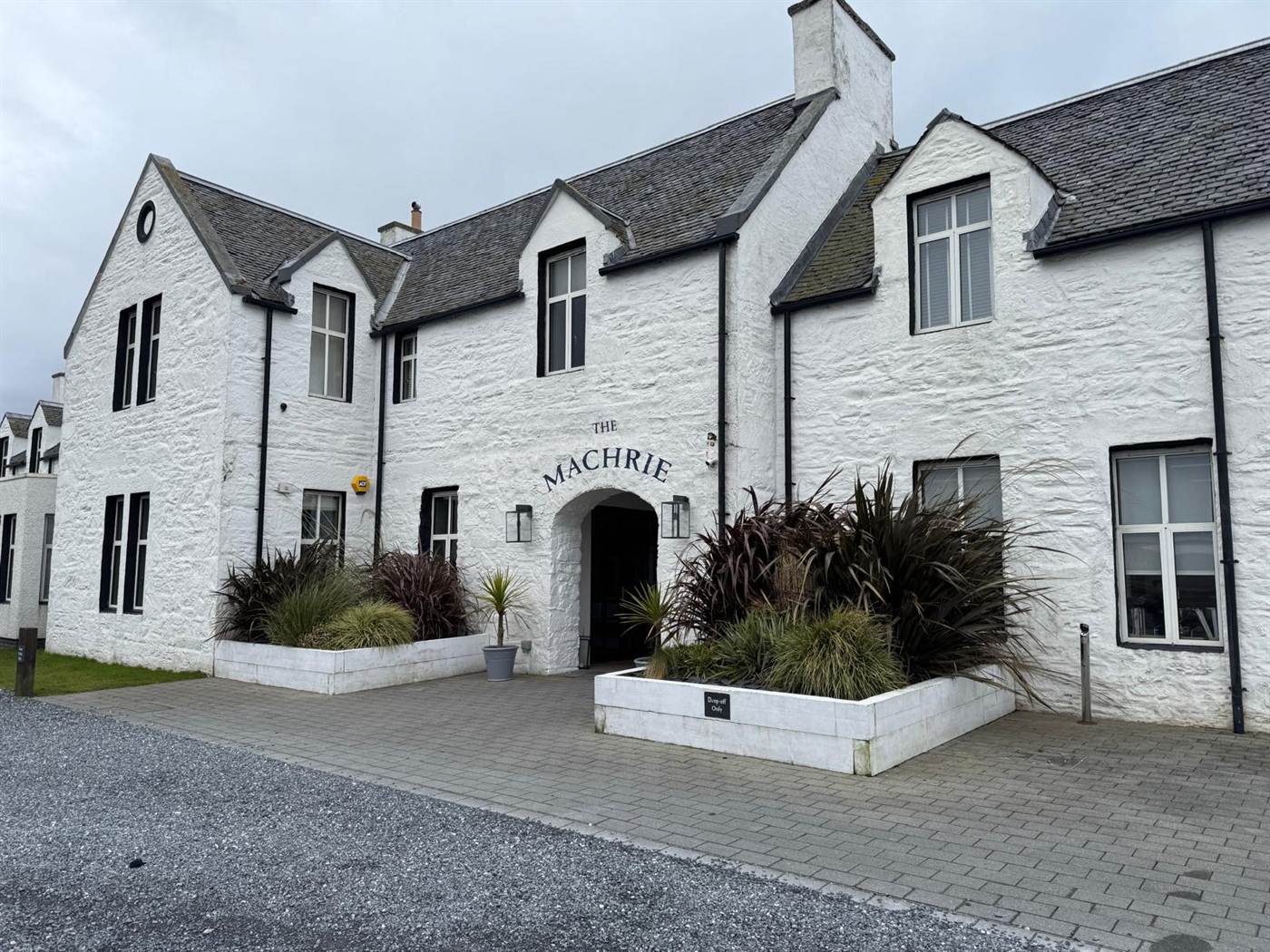
First we went to the island's grandest hotel, The Machrie — a place that starts at around ¥80,000 per person per night. We weren't even guests, just outsiders, but thanks to Arthur's good name we were allowed a little wander inside.
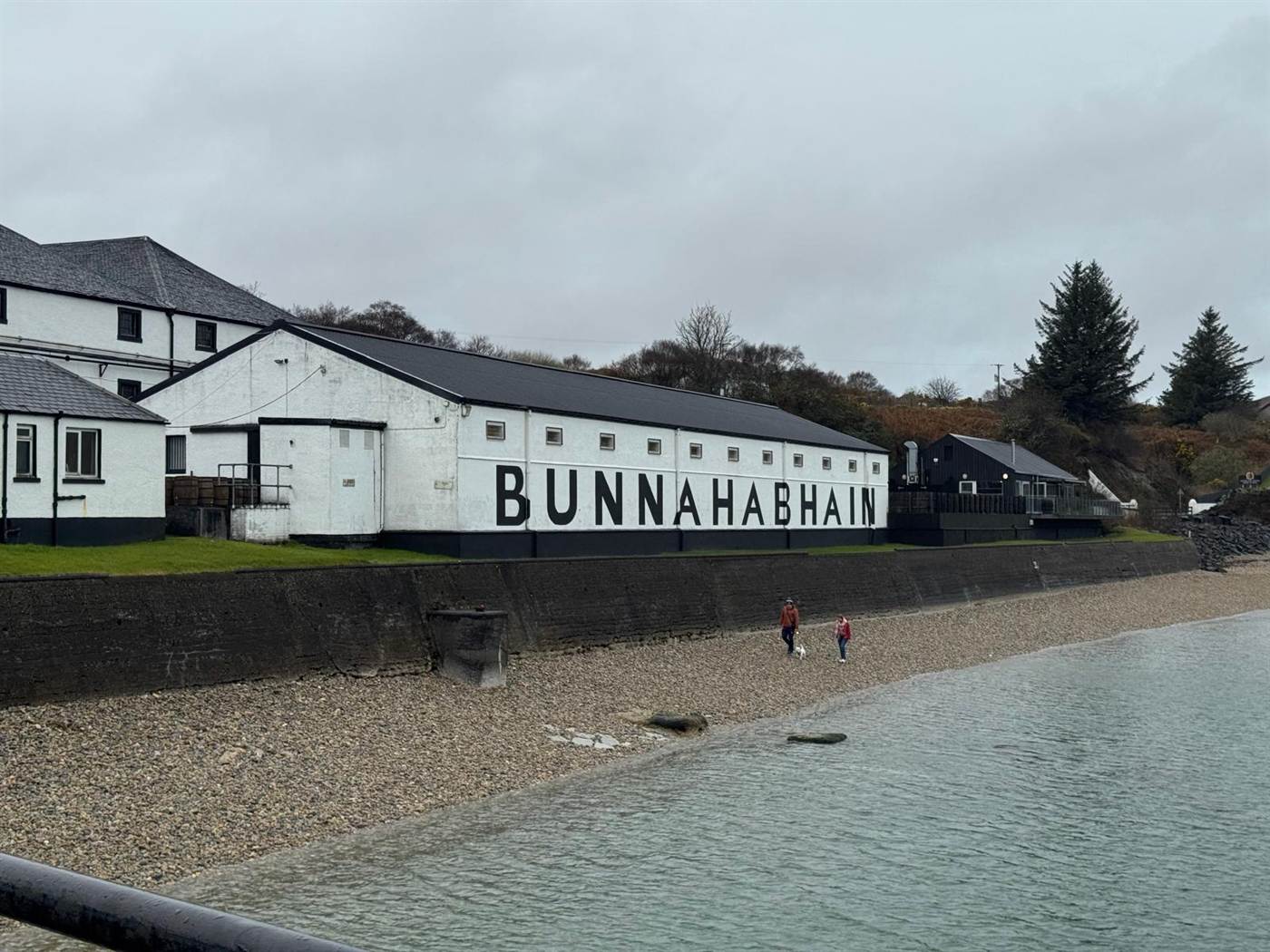
Next, on to Bunnahabhain. Here too we tasted at the shop and bar and photographed the exterior. Bunnahabhain's whisky is generally made unpeated, but I got to try a smoky Bunnahabhain for the first time, which was a real treat. We may well start seeing more of it in Japan from now on.
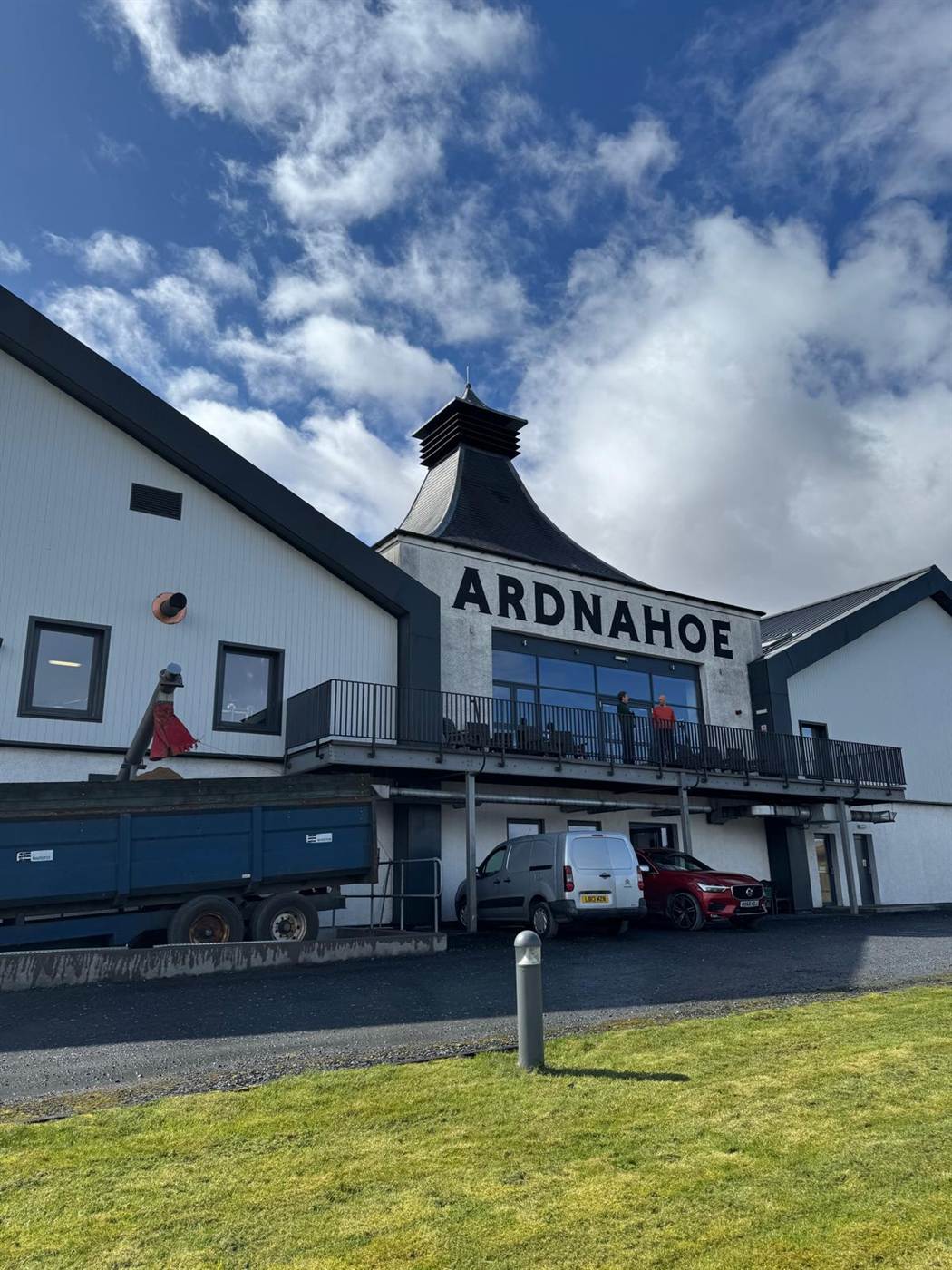
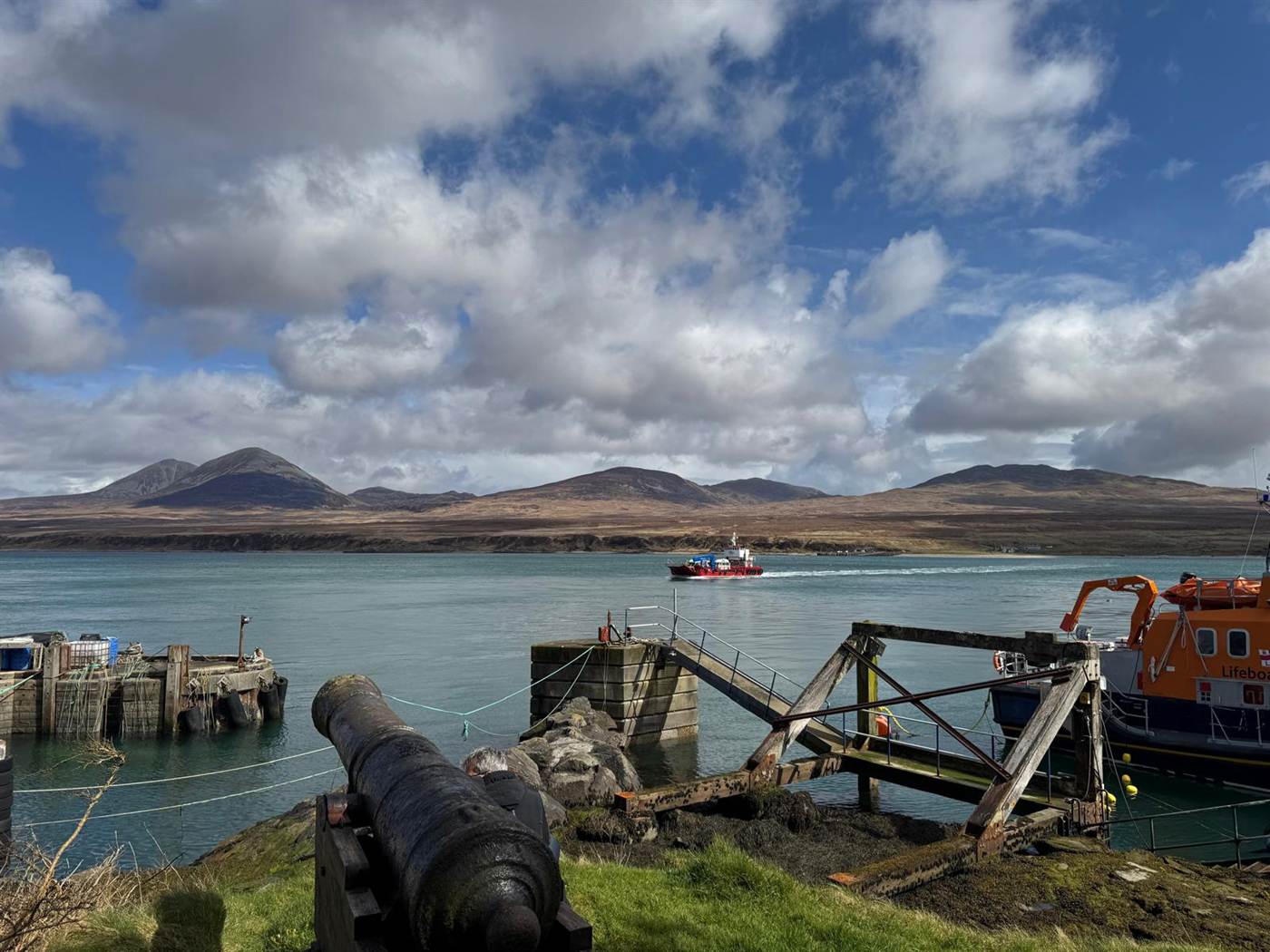
Then, on to Ardnahoe. We enjoyed a tasting here as well. Every distillery releases a limited bottle for Fèis Ìle each year, and last year's edition was so good that I ended up buying a bottle at Ardnahoe on the spot, with no intention of doing so beforehand.
After that, Arthur took us to the harbour: Port Askaig.
This is one of Islay's major harbours, on a par with Port Ellen, and from here you can look across to the Isle of Jura.
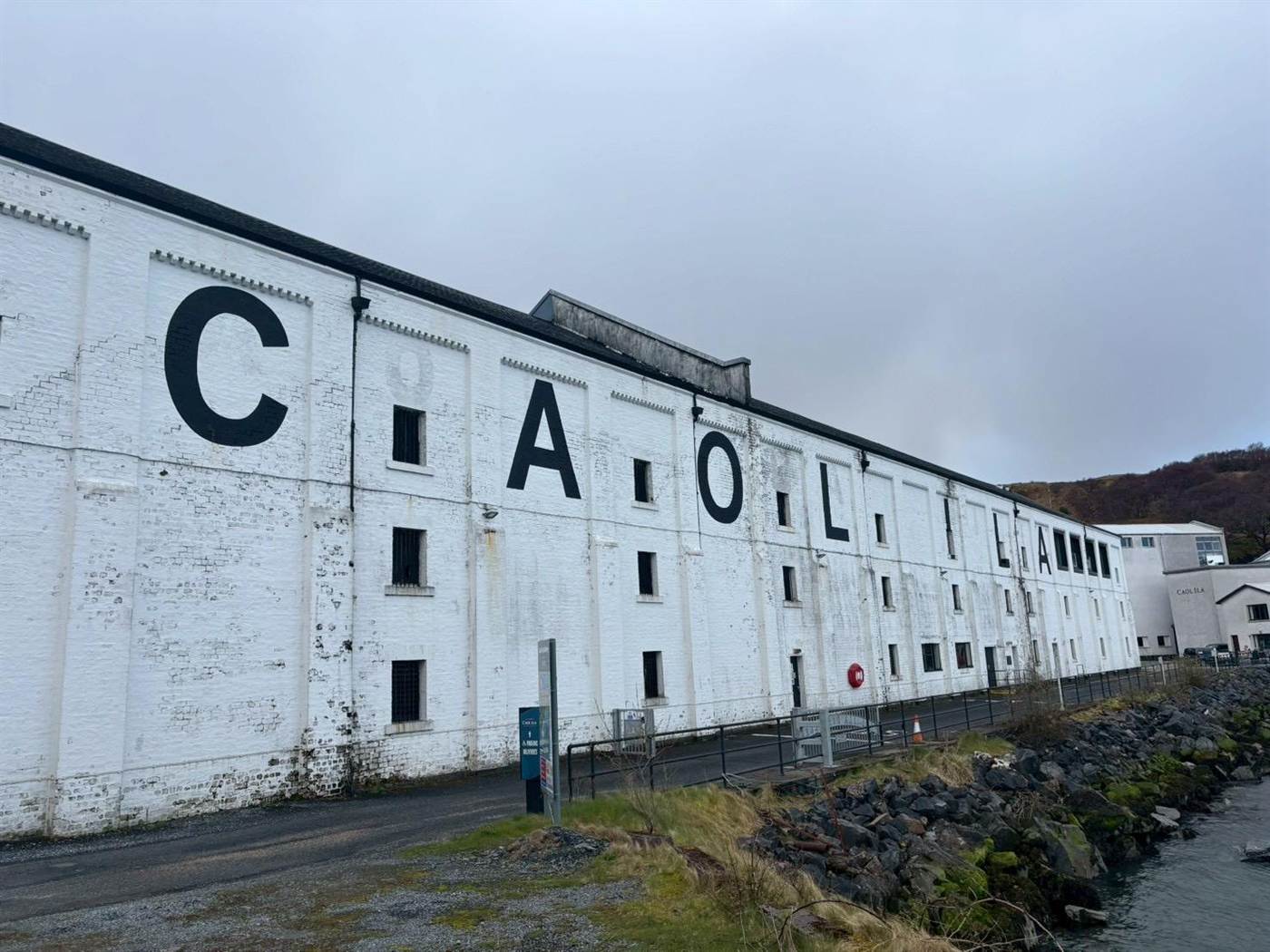
And then to Caol Ila, where we had lunch and enjoyed some shopping. As it happens, I'd heard in advance that a woman named Christine — someone who had looked after the owner of my old pub, both on Islay and in Japan — lived near Caol Ila. When I told Arthur I'd love to meet her, he actually got in touch with her then and there, and our reunion came true, at Caol Ila.
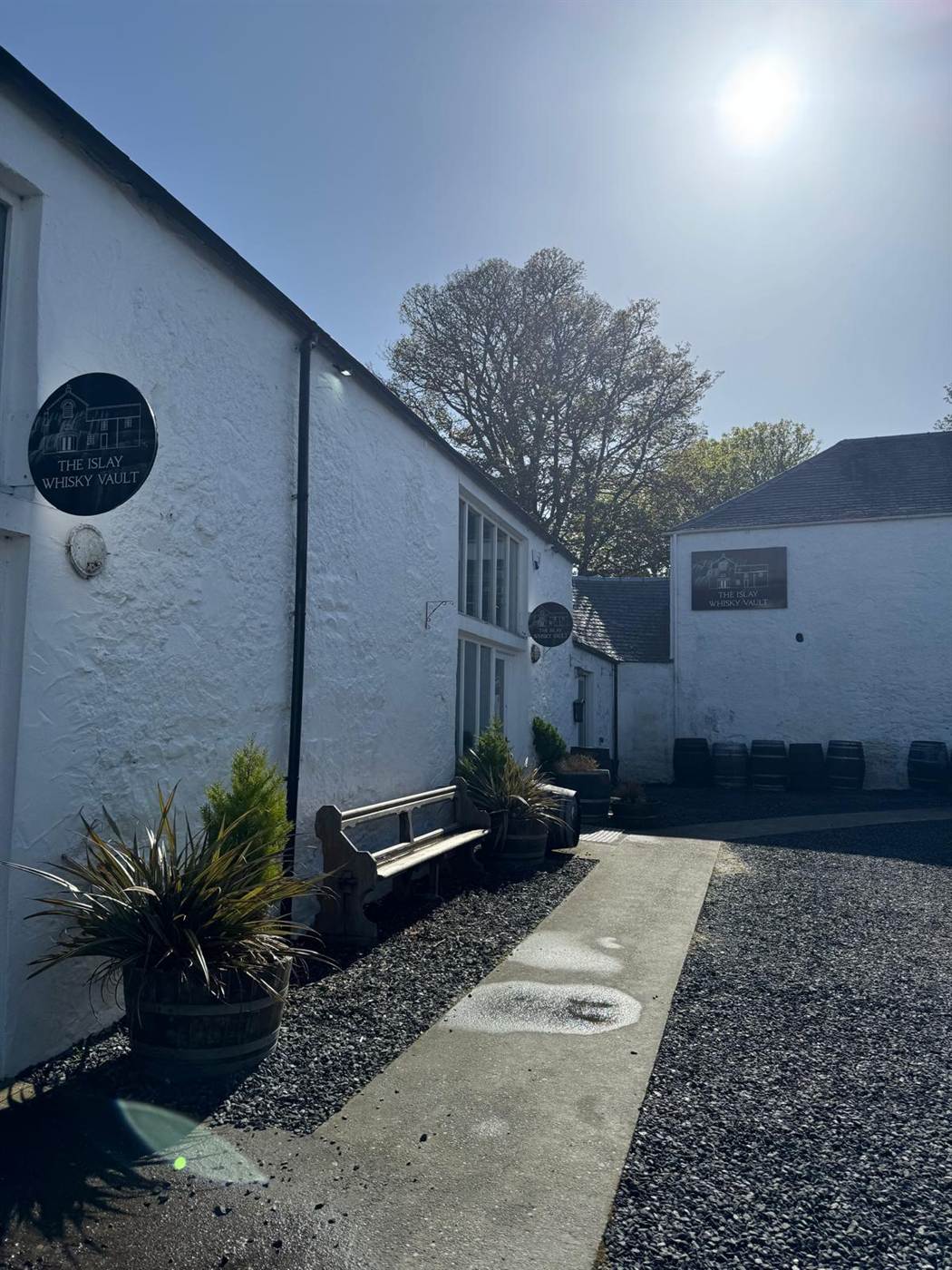
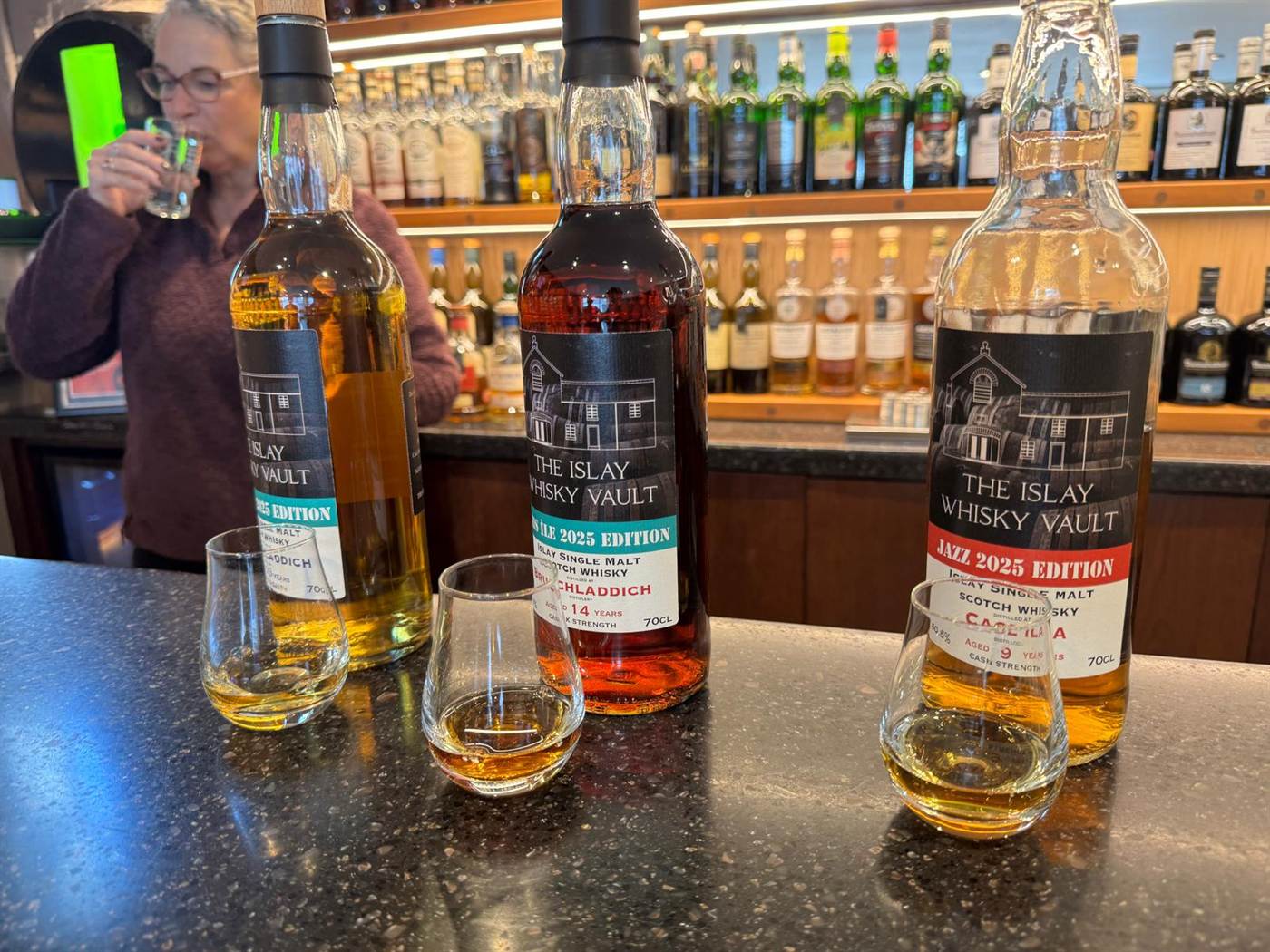
After Caol Ila we stopped at the Whisky Vault, which lay on our way back — a whisky shop that also operates as an independent bottler. Founded by a former whisky collector, it had hundreds of rare bottles on its shelves.
Back in the town of Bowmore, we popped into a shop called The Islay Shop, hoping for some genuinely Islay souvenirs — but it turned out to be an ordinary gift shop, with nothing that really carried the breeze of the island. At another shop nearby, The Celtic House, where a café and a souvenir shop run into one another, you could feel Islay far more. Once again we went back to the cottage for dinner, and so the third day ended.
Route(everyone but me heads home) → parting in Port Ellen → post office → Portintruan (under construction) → Port Ellen distillery → oysters at Sea Salt → Bowmore (peat & lunch at the hotel) → drawing river water → airport → Laggan Bay → evening flight to the mainland → night bus home
Day four, the final day. Everyone but me flew out on the morning service, and at last it became a solo trip. I rode along with the others in Arthur's car towards the airport, getting dropped off on the way at Port Ellen.
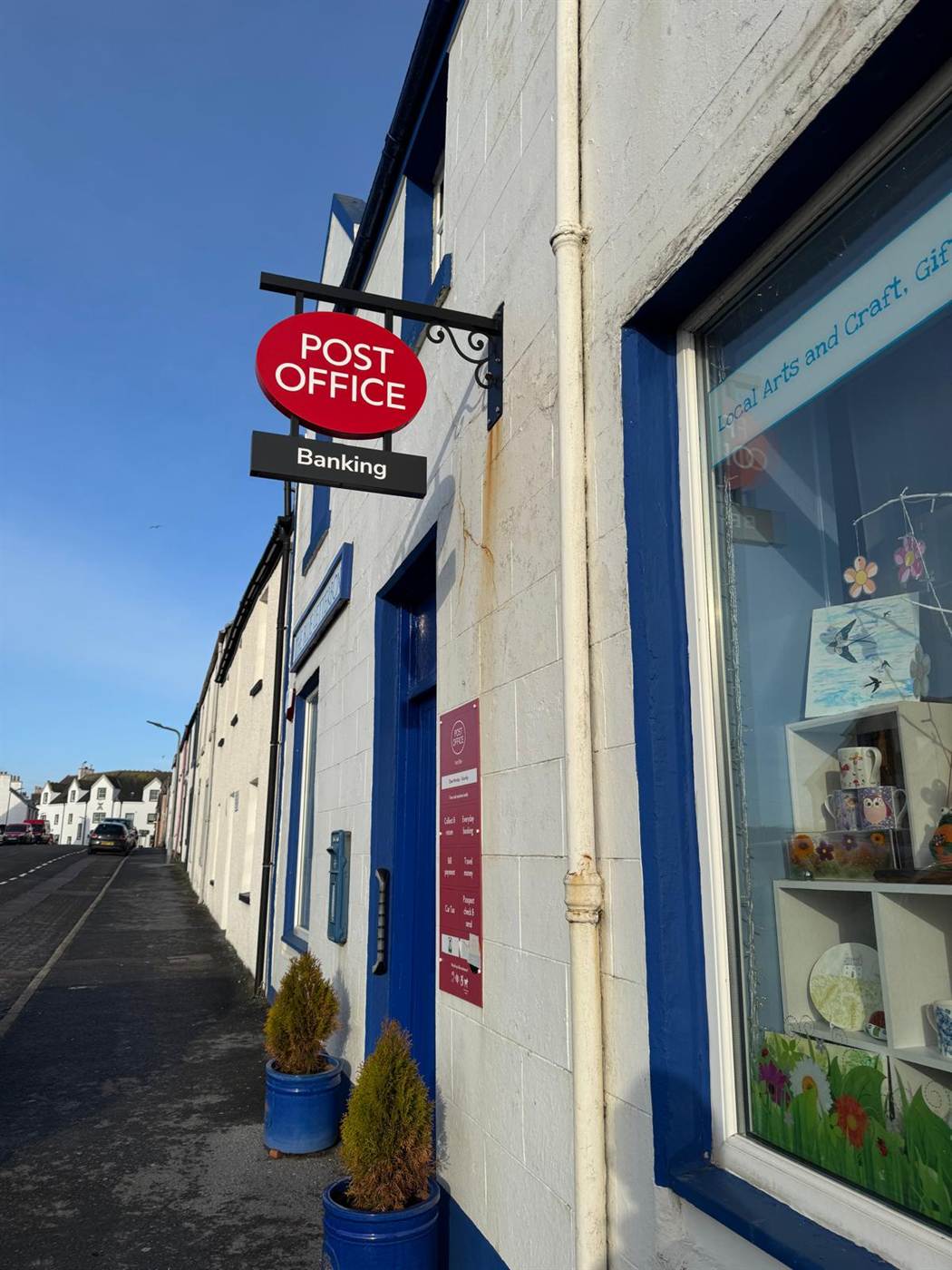
My plan for the last day went like this: I'd bought so many souvenirs and so much whisky that carrying it all was, frankly, becoming a struggle, so I'd post it from the post office to my university halls on the mainland. On day three Arthur had told me it could be sent, so I was fully counting on it. That was the plan.
But I was told I could only send up to two bottles of whisky — and, already lugging six, I was now condemned to carry my luggage around all day. Two bags, one on my back and one across my front. For now I had the post office hold my bags while I went to see Portintruan, Islay's twelfth distillery, currently under construction. It was, of course, a building site, so I couldn't get close. Distillation is due to begin at the end of 2026.
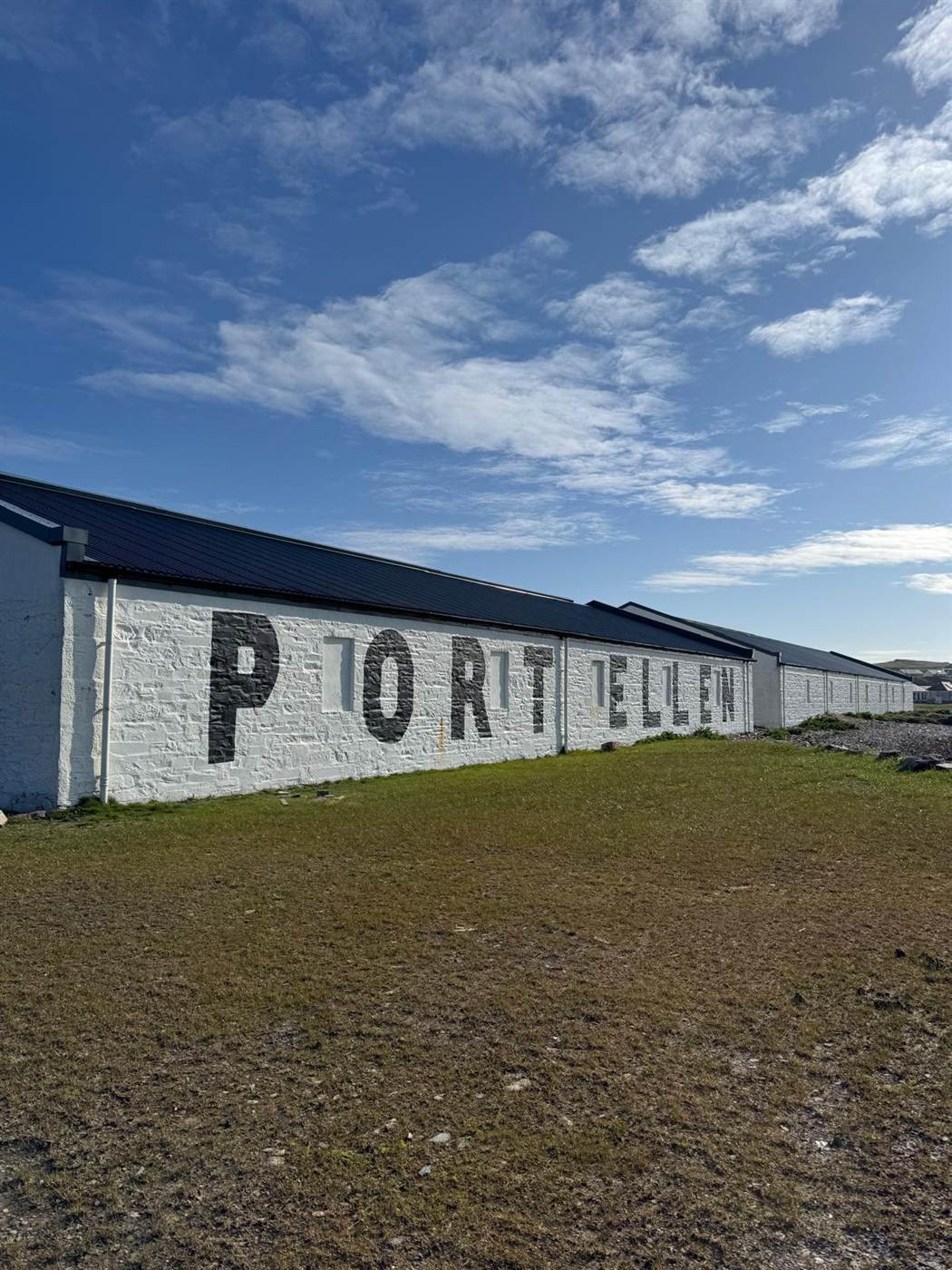
After that I collected my bags and headed to the Port Ellen distillery. Having only just resumed distilling, Port Ellen lets only those on its very expensive tour onto the grounds, so I had to make do with admiring the exterior.
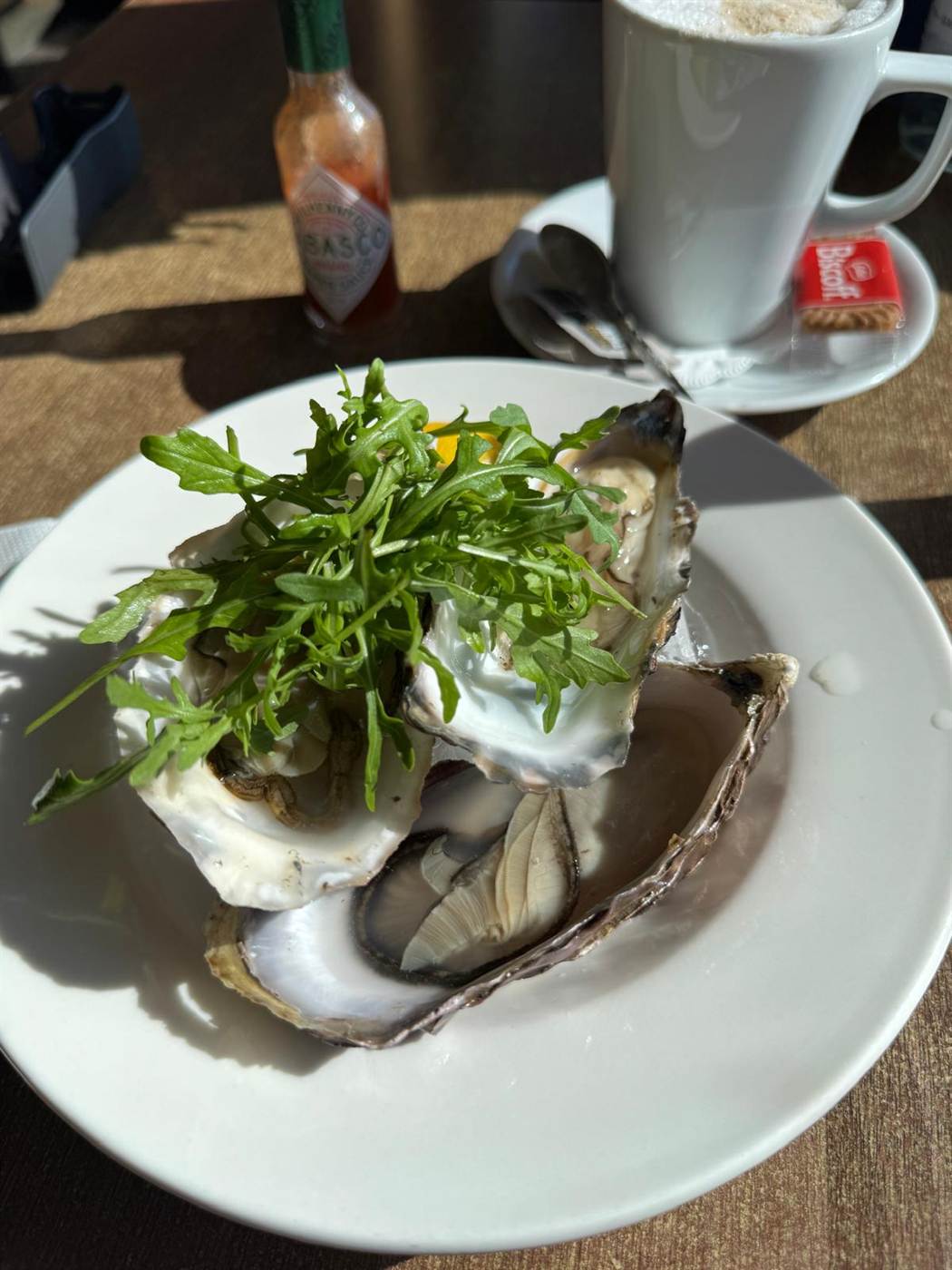
While waiting for the bus to Bowmore I had some time, so I went to Sea Salt — the place from day one — and finally had the Islay oysters I'd missed the first time. They were spectacular: long and slender, fresh and milky, the brininess matching the flesh perfectly.
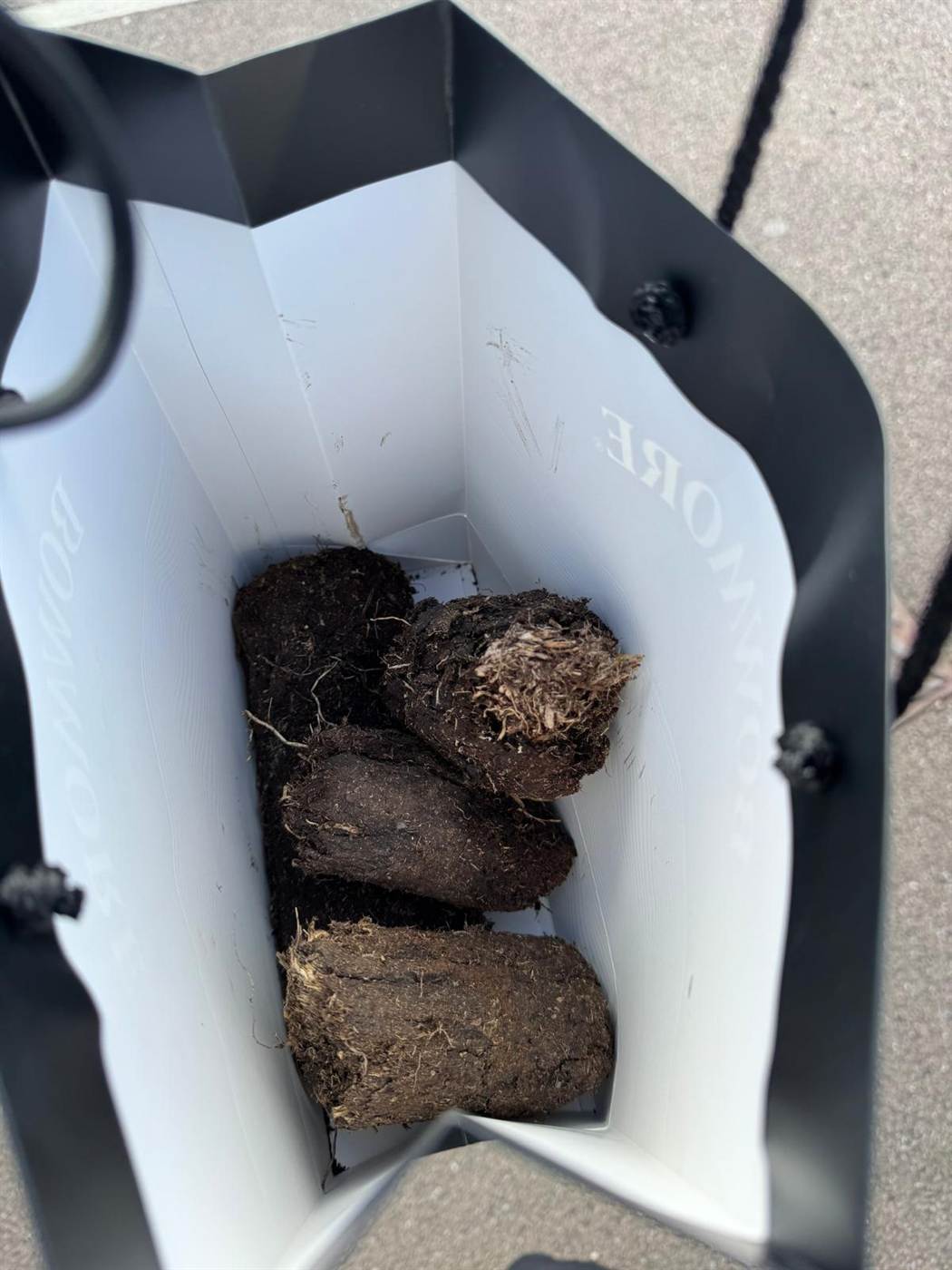
I took the bus to Bowmore. First I went to the distillery and got hold of some peat as a souvenir. When I said, "I was on the tour the other day — could I have some peat?" the answer was an immediate "of course." Not only did they take me to the kiln room to fetch it, they also showed me the malting room I'd missed on the tour. Far too kind.
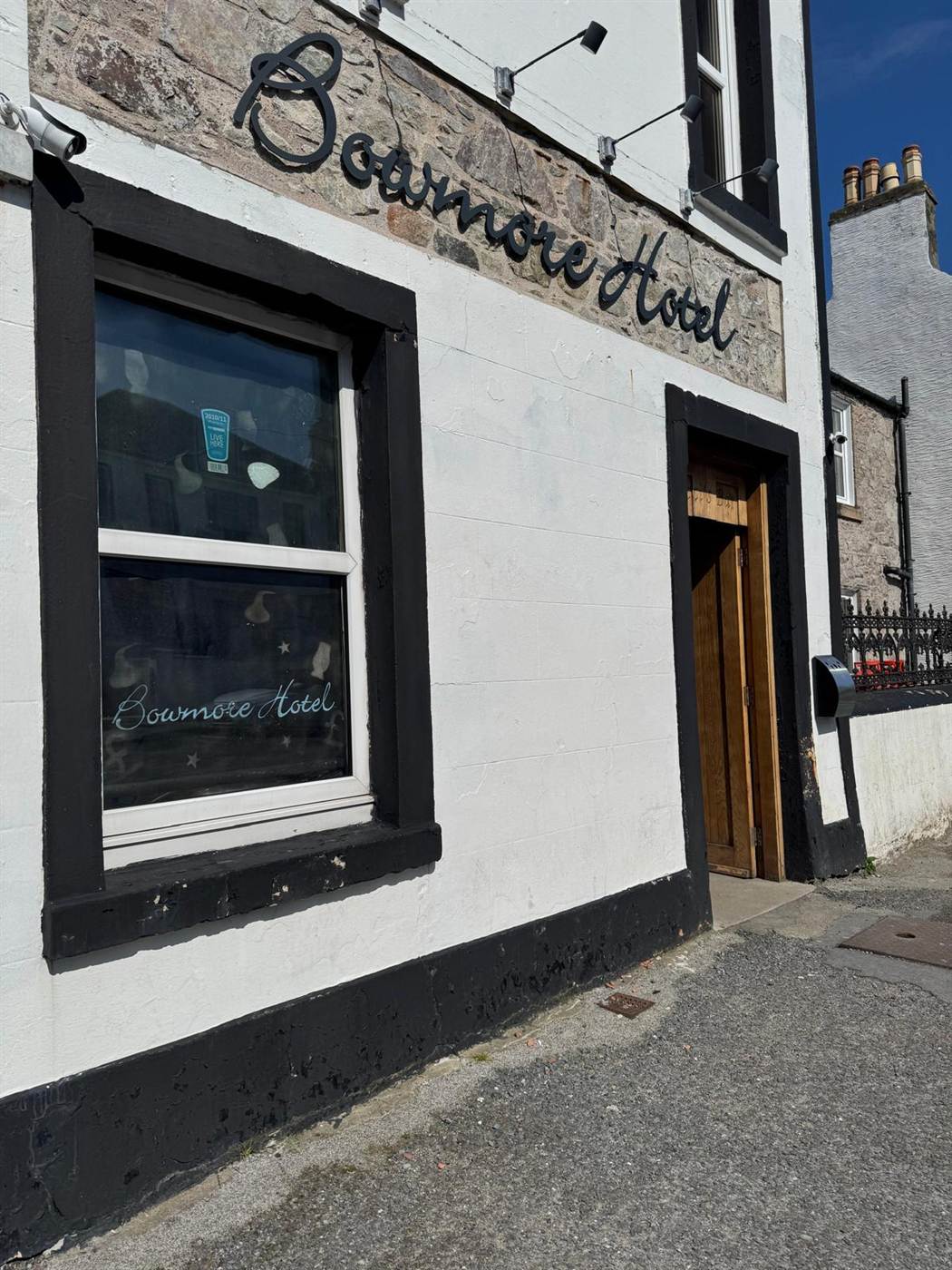
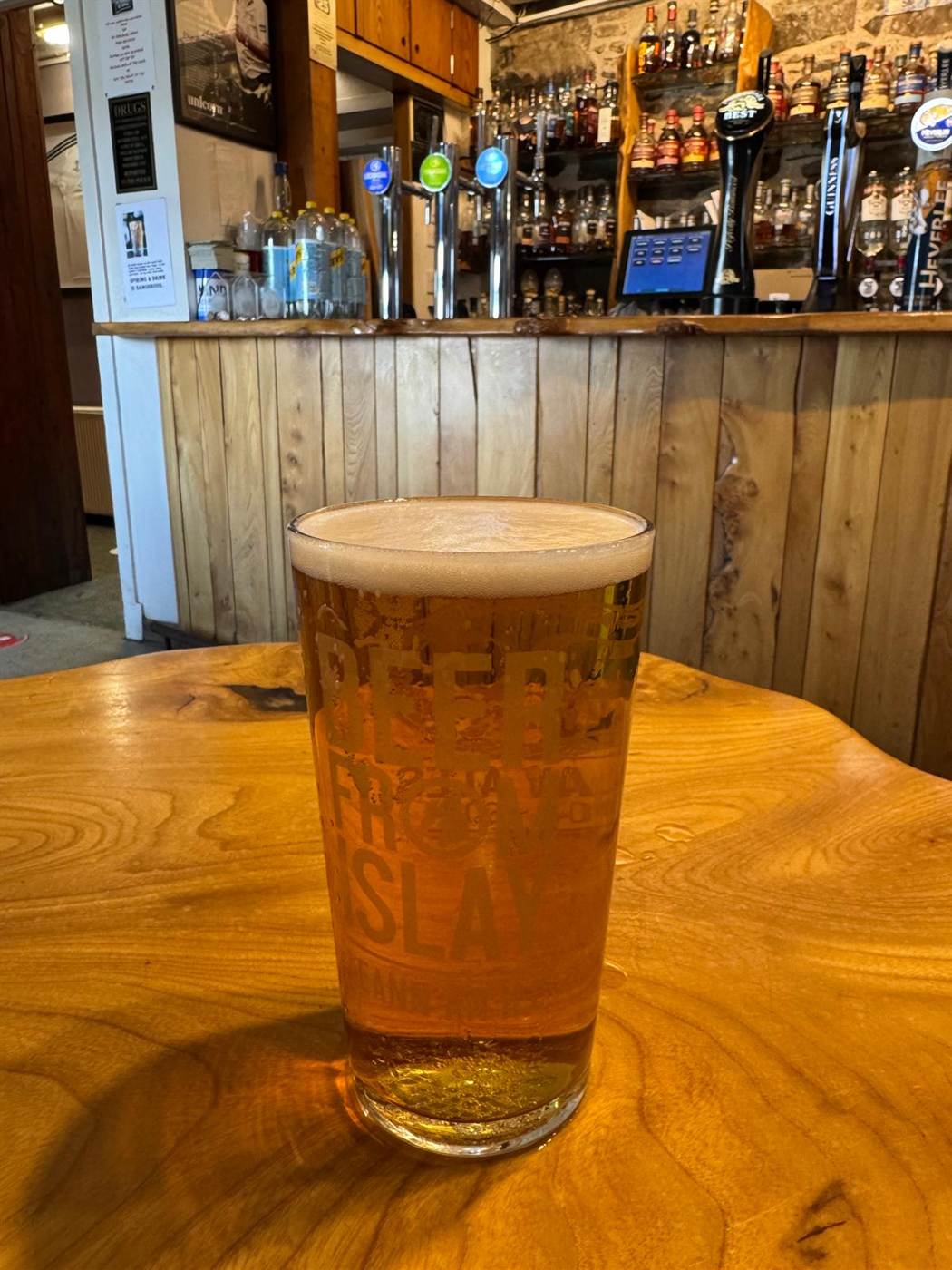
For lunch, I treated myself to an Islay beer and "Islay beef" at the Bowmore Hotel.
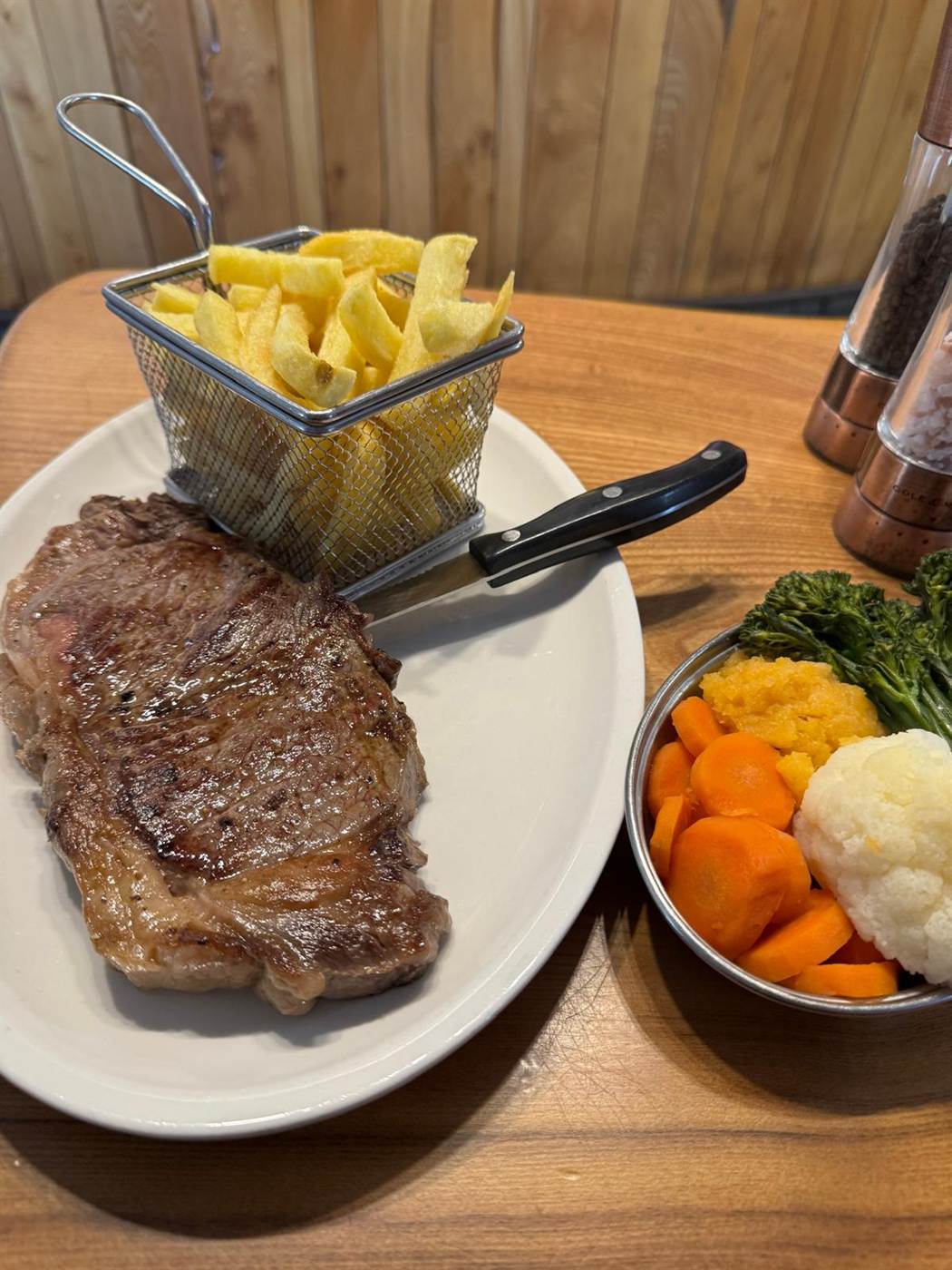
Scotland is famous for Scottish beef, and rumour had it that "Islay beef" was famous too. In truth, though, the island doesn't actually process and sell its cattle itself; the cattle are first taken to the mainland, processed there, and sold as "Scottish beef." So, strictly speaking, you apparently can't say "this beef is from Islay." And yet the people at the Bowmore Hotel called it Islay beef. I'm not quite sure what to make of it — but let's just say that I ate Islay beef, and leave it there.
Because the river water on Islay passes through the peat layers, it's tinged faintly brown — a clear, brown water, if you like. I'd wanted to take some home as a souvenir, but I couldn't find a river I could easily draw from. Hoping to track down a spot, I first asked the staff at The Islay Whisky Shop while doing some shopping, but they didn't know. Here, though, I came across some enormous news: I managed to uncover the true identity of "Finlaggan," one of those Islay bottles whose distillery is never disclosed. And — having written all this — I'm sorry, but I can't reveal it here. The islanders all seem to know, so do ask around when you visit.
Next I had a coffee at The Celtic House café and asked there about the river too, and was told there was one nearby. With the bus to the airport approaching, I hurried over and managed to draw my water.
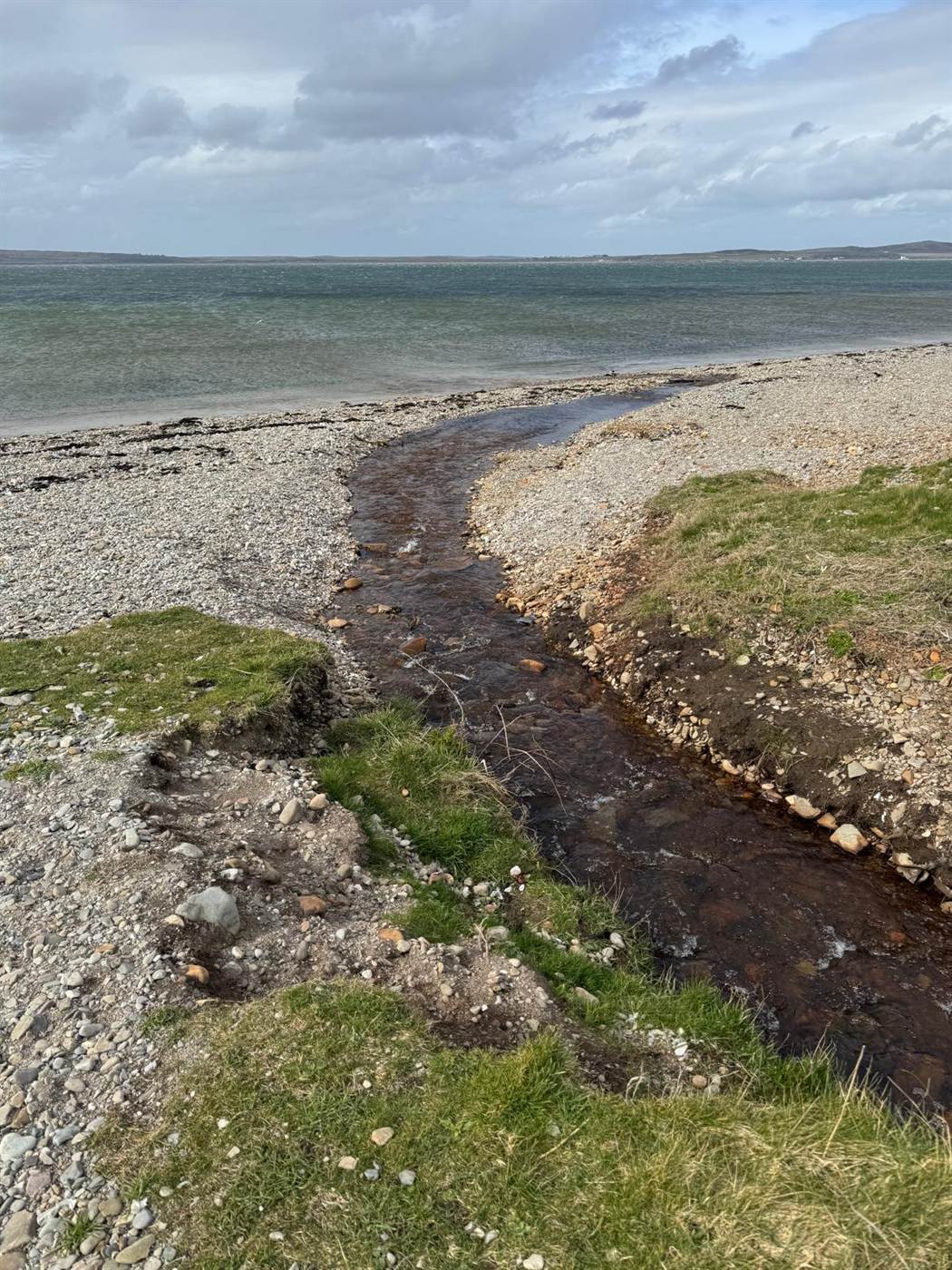
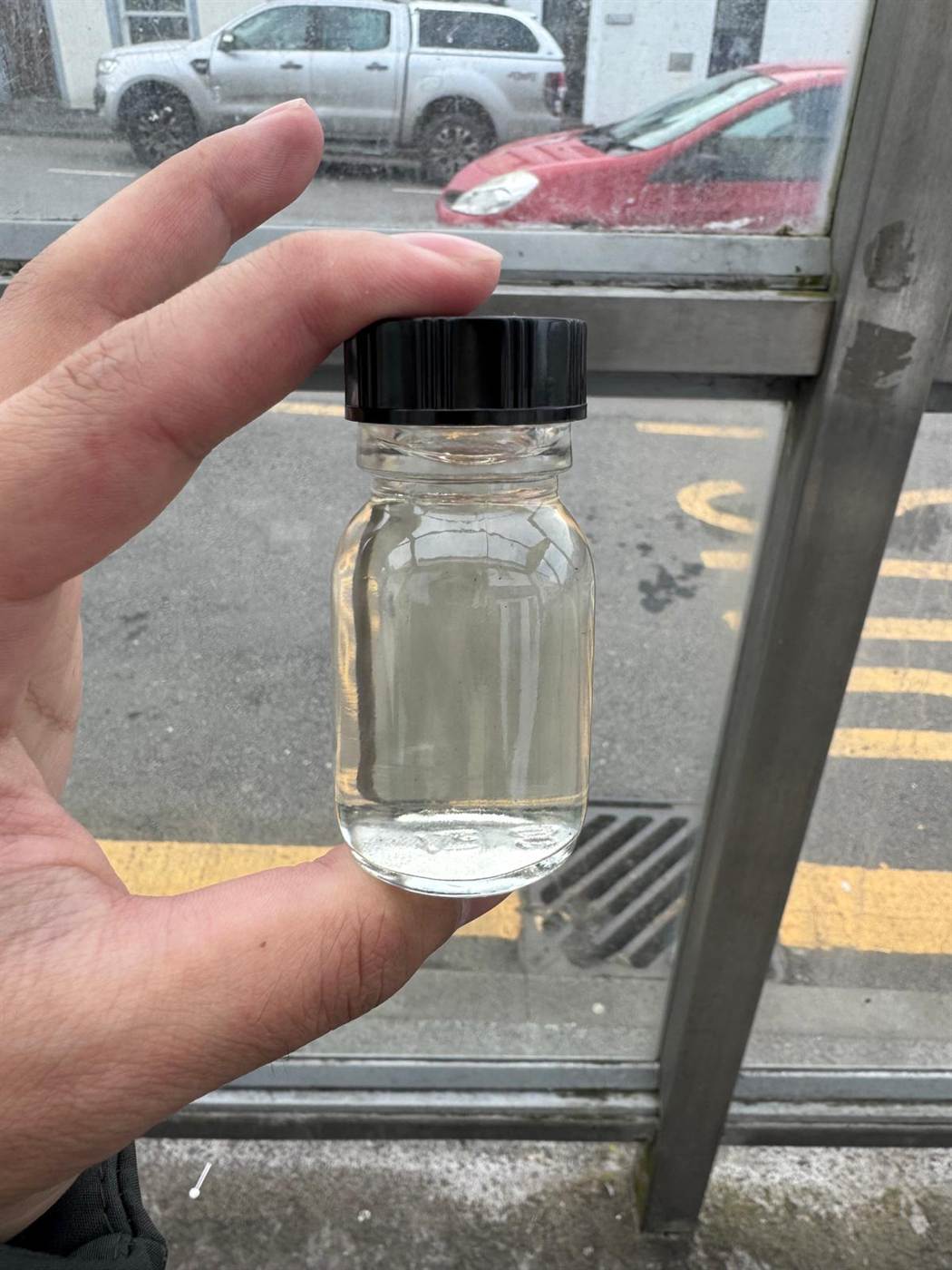
It might be a little hard to tell, but it's quite brown. It is absolutely not dirty!!
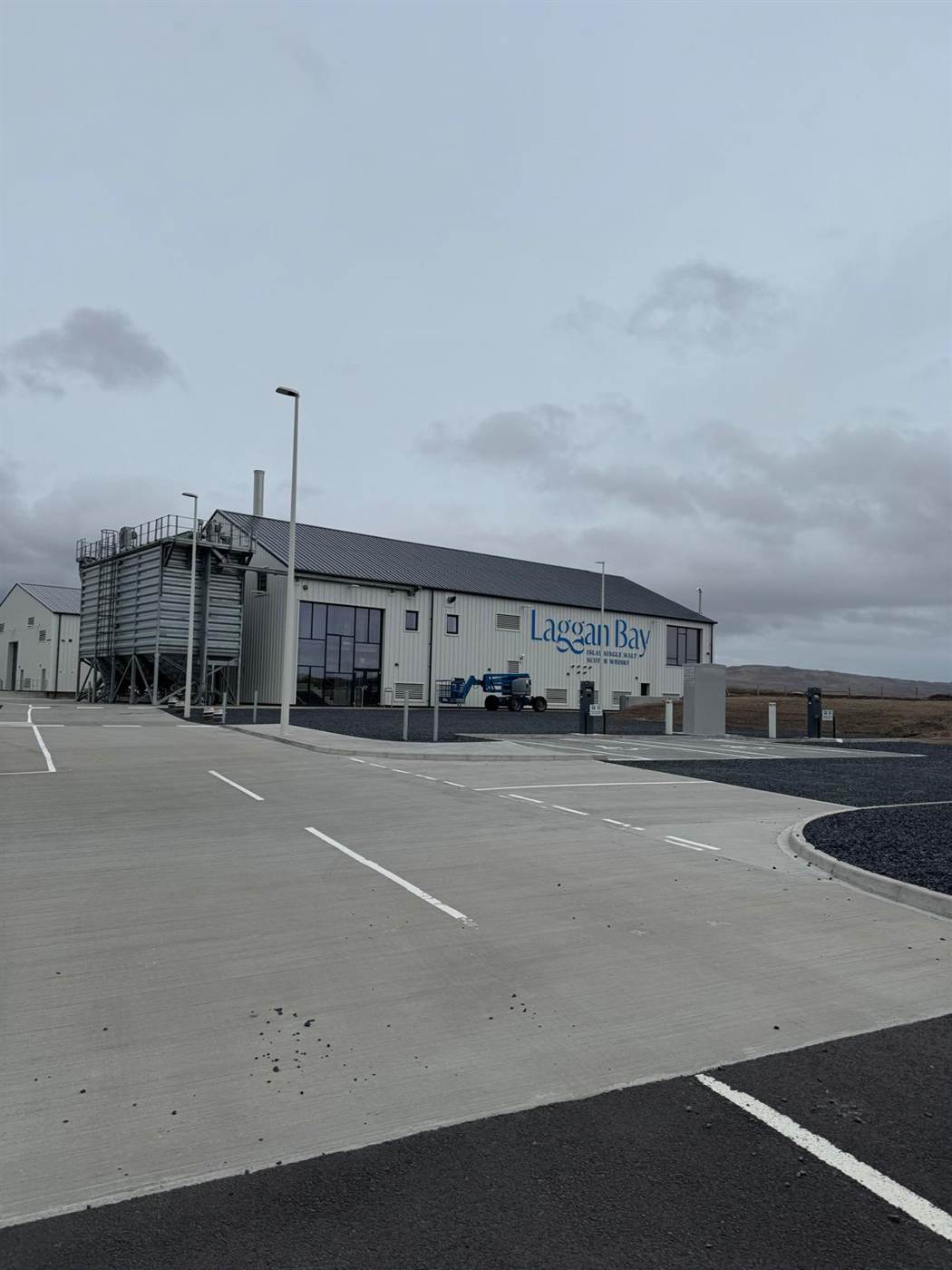
I caught the bus to the airport. With a little time to spare, I dropped by the distillery right in front of it — Laggan Bay, Islay's eleventh, which had begun distilling only a week before this very trip. I'd hoped I might leave my bags at the airport, but I was told no, so I really did spend the entire day with two brutally heavy bags on my back.
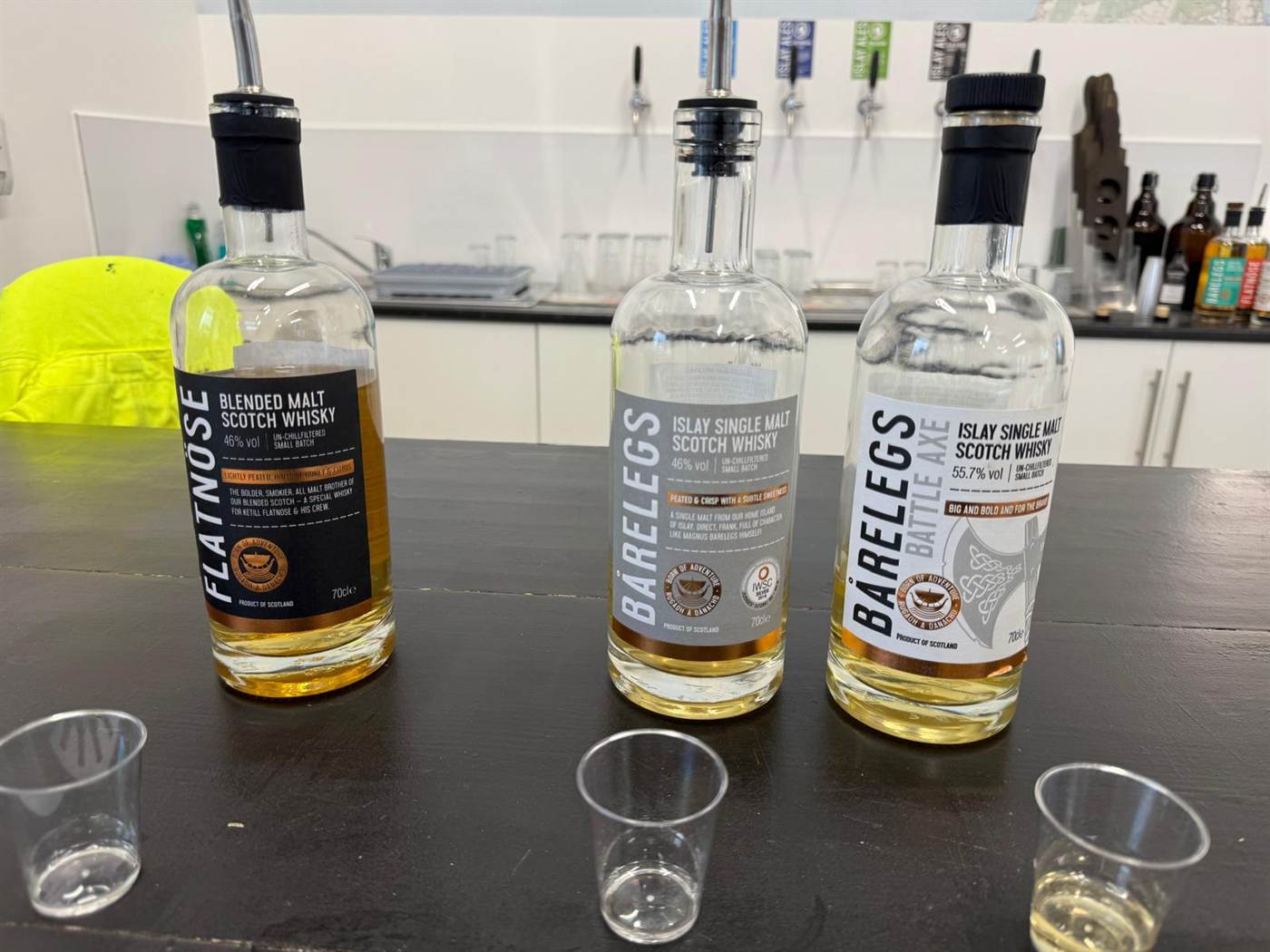
In that state I went to the distillery. As a brand-new operation I couldn't get inside, but the same company runs an Islay beer and Islay whisky bottling business, so I went to the shop within the same grounds. There, too, they let me taste the beer and whisky. To be poured all of this just from dropping in unannounced — I was genuinely moved.
The member of staff chatted with me about all sorts of things and — wouldn't you know it — he had lived in Japan for several years, up until last year. The conversation took off, and Nelson showed me everything, from the brewery where they make the beer to where they bottle the whisky. He even let me try the beer fresh. To have it all shown to me without having booked any tour at all — I can only be grateful.
The highlight was when he said, "I'll let you in on it, so taste this and guess the distillery," and I took up the challenge with a bottler's whisky whose distillery was kept secret. It had a faintly smoky nose over a solid, sweet base — and when I named it straight away, "this is Bunnahabhain," Nelson was so astonished he nearly fell over. I was delighted too.
While all this was going on, the time finally came to leave Islay. Heading to the airport, I bumped into Arthur once more, and we got to say a proper goodbye. The flight was delayed by an hour; I made it to the mainland, but missed my connection from Scotland to England, so I changed plans on the fly and took a night bus home. Having carried that crushing load all day, I was utterly worn out.
The next day, I finally got home and laid out everything I'd bought.
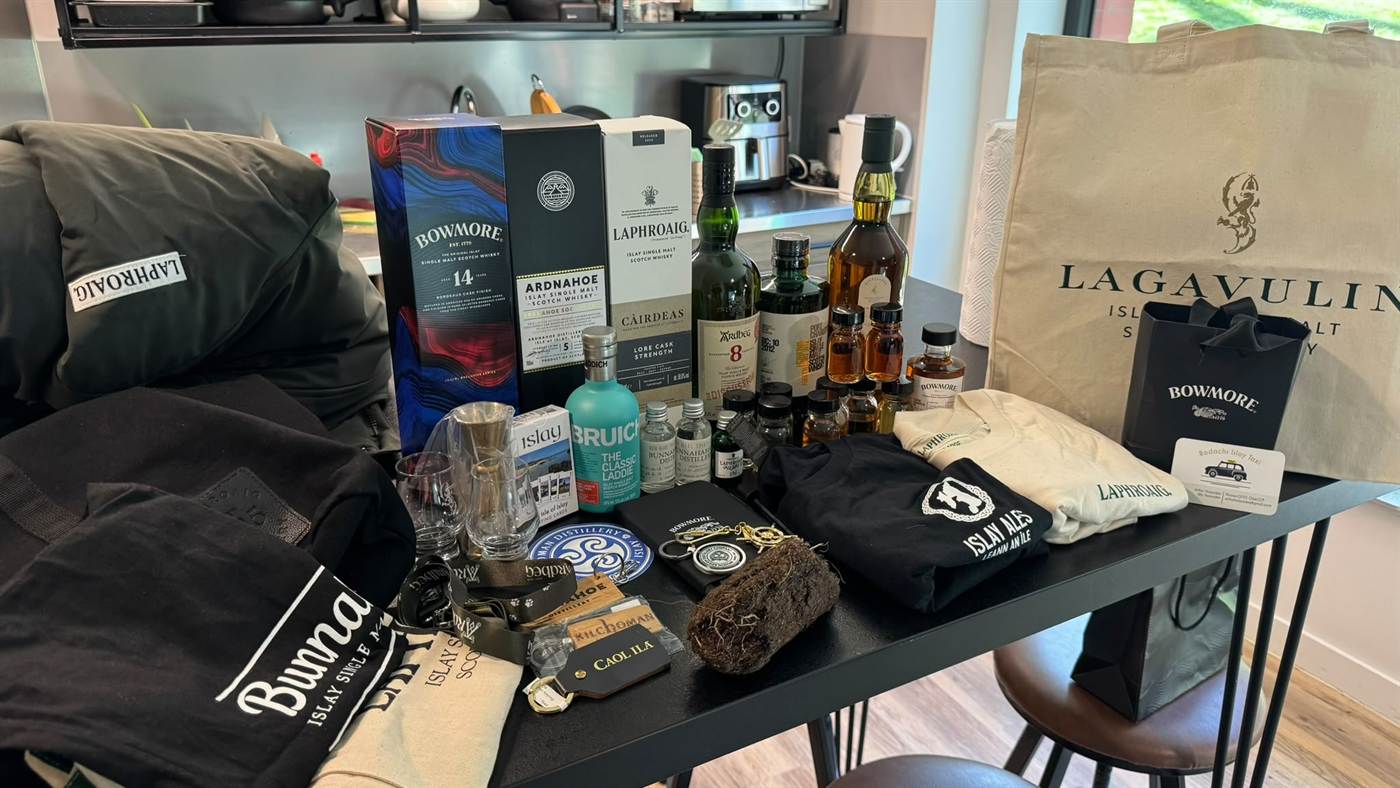
All of this had been crammed into a single bag. Crazy, honestly… From here I'll send some of it back to Japan, share some with friends, and take my time enjoying it all.
This turned into a long one, so thank you for reading all the way to the end. That's my account of Islay. The sense of time flowing slowly across the whole island, the way it does in Okinawa; the exquisite seafood; and, above all, a dream of an island that anyone who loves whisky simply has to visit at least once. If you have any thoughts or questions, please don't hesitate to send them my way through the contact form on my site (hibikishimizu.com).